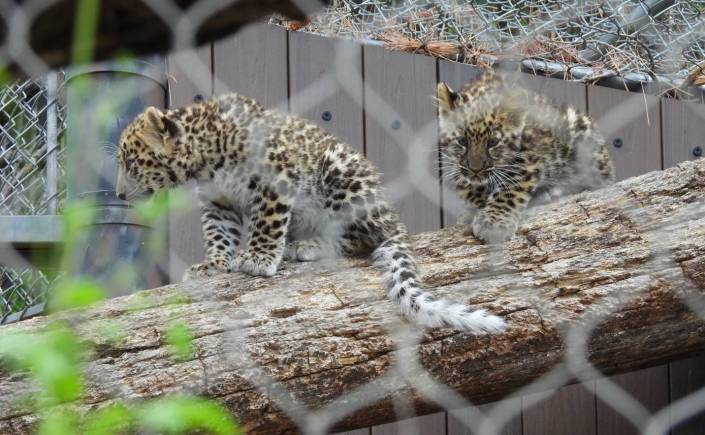
When your species numbers only 300+ individuals globally, you are considered critically endangered. As a baby born to such a rare set, you constitute roughly 0.33% of your kind. Such is the case for Basha and Mango, two Amur Leopard cubs born on May 17, 2023 at the Cheyenne Mountain Zoo in Colorado Springs.
Amur Leopards (Panterus pardus orientalis) are a subspecies of leopard (their African relatives are the nominate subspecies, Panterus pardus pardus). Their numbers have been decimated due to loss of habitat and loss of life from poaching. Their beautiful coats fetch a lot of money, as do their bones (please don’t wear the fur of rare animals or use their body parts to enhance your libido!).
The wild population lives mostly in mature forests in Far East Russia and across the border in China (which is home to the Amur River and Amur region). The 1970s alone saw a loss of 80% of the animals’ habitat as a result of deforestation and it is estimated that their population had plummeted to 19-26 individuals as recently as 2007. Concerted anti-poaching efforts and the establishment of the Land of the Leopard National Park in 2012 in eastern Russia, which covers 650,000 acres, has enabled more leopards to survive. Breeding programs at zoos and wildlife parks also add to the number of captive animals.
With only 100 Amur Leopards surviving in the wild, and 200 to 220 in various species survival programs, brothers Basha and Mango, together with their mother, Anya, and father, Anadyr, represent approximately 1% of all extant Amur Leopards. Reason enough to schedule a visit to our local zoo to welcome the new arrivals.
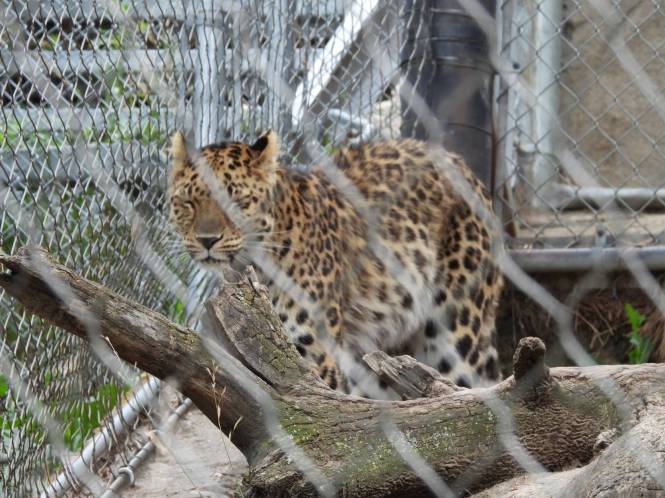
Mother Anya
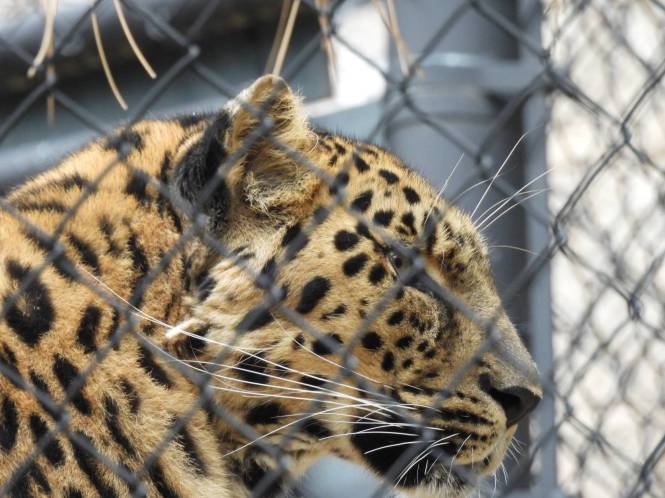
Father Anadyr
August 14, 2023 was an unusually cool summer day, starting out with the thermometer in the mid-60s (about 18⁰ C) under cloudy skies, and never warming above 75 degrees (24⁰ C)—my favorite sort of day. Luckily, it also seemed a good temperature for the cubs, as they were out in the open with their mother, exploring their enclosure and playing with one another. My husband and I were among their first admirers in the morning and easily watched them for an hour before returning there once again in the afternoon to catch a few more glimpses, and photographs. Of course, all were taken through a fence, and I don’t have a photo editing program that can remove the wires, or maybe I do, but haven’t bothered to find out.
The brothers were the first Amur Leopards born at our zoo in nearly 20 years and are creating much excitement and elation, especially in the wake of two previous failed pregnancies by now 9-year-old Anya. As is the norm, the cubs weren’t given a name for the first 30 days. Their gender wasn’t known until they were first handled by zoo staff when two months old, and their names were subsequently selected by generous benefactors. Basha’s was inspired by the leopards’ lead zoo keeper, Basia; Mango’s was chosen in honor of the donor’s deceased cat.
Without further ado, meet the protagonists of today’s post: Mango and Basha. Mango has a darker coat than his brother and the facial markings above his nose resemble the letter “M,” while Basha is lighter in color and slightly larger in size. Upon close inspection, he has a heart-shaped mark lateral to his left eye, which is visible in one of the images.
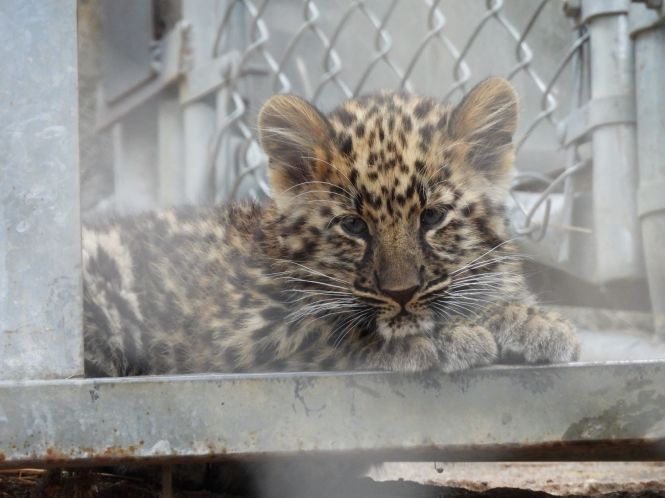
Mango (the lines above his nose resemble the letter “M”)
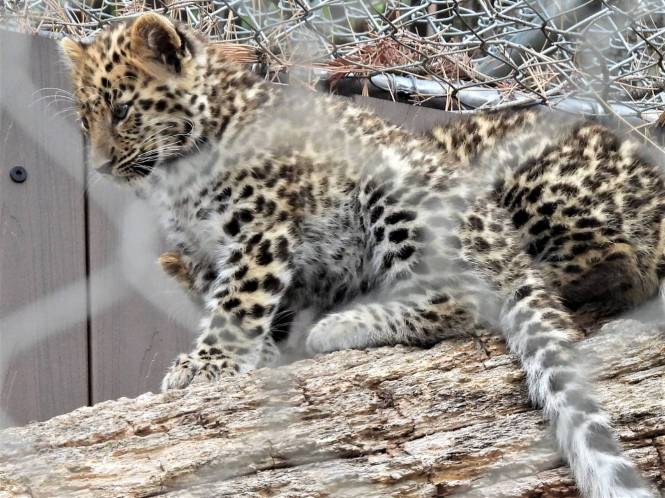
Basha (look for the heart-shaped spot lateral to his left eye)
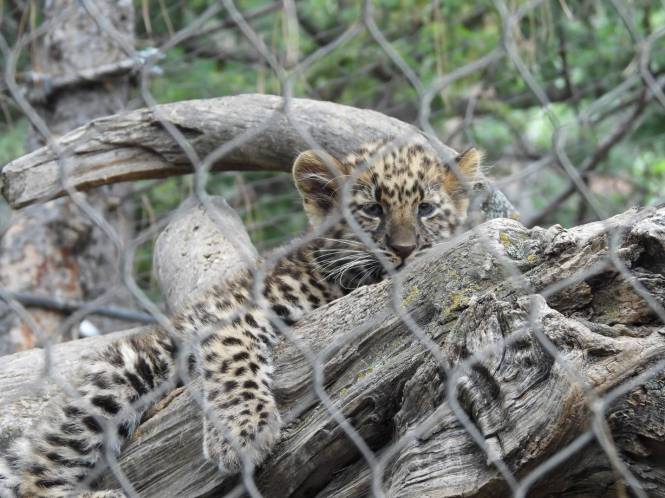
Mango
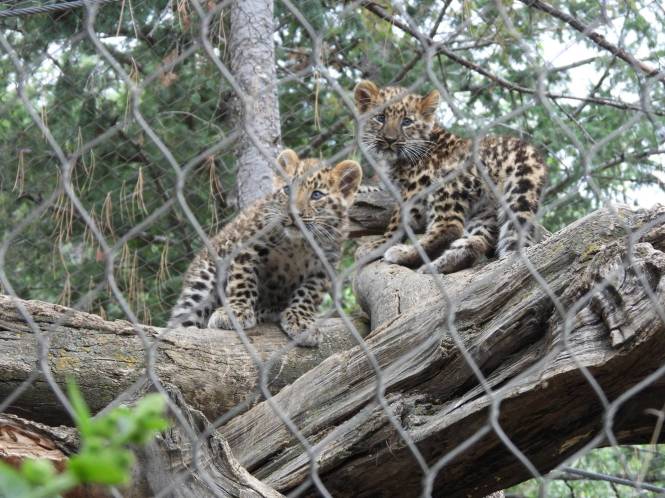
Basha on the left, Mango on the right
Mango seems to be the leader among the siblings. He was typically the first to climb a log, explore a new corner of the yard, or pounce—and chew on—Basha’s or Anya’s tail. He also seemed to pay more attention to visitors, which likely accounts for the fact that I took more snapshots of him. Father Anadyr was in a nearby enclosure but he doesn’t have contact with his offspring, in accordance with the cats’ natural behavior in the wild.
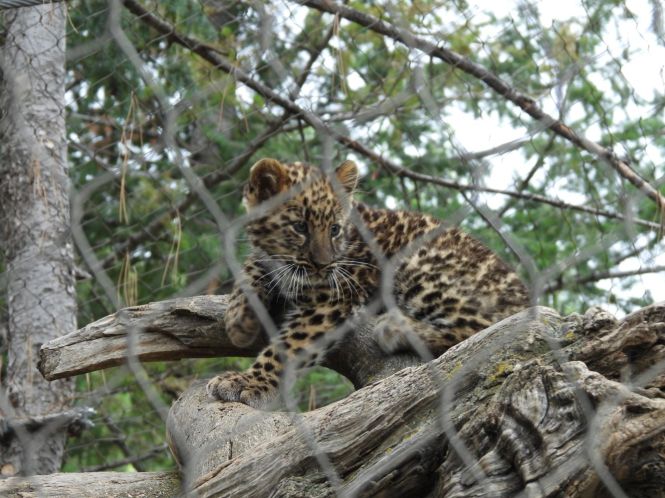
Mango
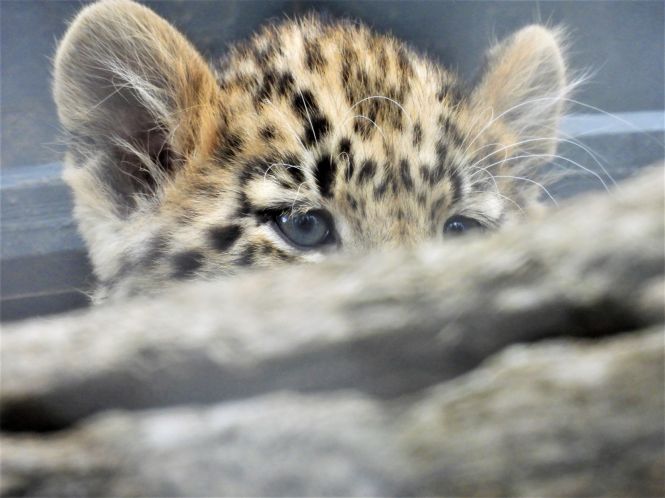
Basha (I think)
I’m so happy to have met Basha and Mango, two rare and precious creatures. We wish them and their parents—as well as all their critically endangered kind—good luck. The birth of these charismatic cats is a harbinger of hope for their beleaguered species.
 tanja britton
They are so lovely, such rare views. 😃
LikeLiked by 1 person
Thank you. We really enjoyed meeting these beautiful cats.
LikeLiked by 1 person
Sehr schöne Tiere, liebe Tanja. Hoffentlich gelingt es, die Art zu erhalten.
Liebe Grüsse. Ernst
LikeLiked by 1 person
Dankeschön, lieber Ernst. Wir hoffen auch, daß sie überleben werden.
Herzlichen Gruß zurück,
Tanja
LikeLiked by 1 person
Do you know why male leopards in this species don’t have contact with their offspring?
LikeLiked by 1 person
According to the zoo staff, the males of most species of big cats, except for lions, are not involved in the raising of their offspring. After they mate with the females, they take off and continue to live a solitary life.
Why is a question for a higher authority.
LikeLike
Lucky you to have seen them!
LikeLiked by 1 person
Thank you, Christa. We think so, too. 😊
LikeLiked by 1 person
They’re so adorable! Perhaps this is good motivation for Pat and I to finally make a visit to Cheyenne Mountain Zoo!
LikeLiked by 1 person
I hope you can find time on your busy schedule. 😊 And if you do, I hope you will like the zoo and its many wonderful animals.
LikeLiked by 1 person
Don’t you just want to rub their furry little heads?
LikeLiked by 1 person
It is very tempting! 😸
LikeLiked by 1 person
There probably were tens of thousands of these animals 100 years ago. Now there are 300. Pitiful.
LikeLiked by 1 person
I had the same thought, Neil. I looked for an estimate of how many might have existed at one point, but couldn’t find a number. Their precipitous decline is a sad statement about human priorities.
LikeLiked by 1 person
So gorgeous and so sad. I photographed one in the wild.
LikeLiked by 1 person
Seeing one of these beauties in the wild must have been extra special, Cindy. Let’s hope their numbers will continue to increase.
LikeLike
How absolutely cute the babies are! And it’s ever so wonderful that they are there with the species on the verge of extinction.
LikeLiked by 1 person
The fact that there are so few left makes seeing this family very special. Let’s hope for the best!
LikeLike
🤞🤞🤞
LikeLiked by 1 person
Exactly!
LikeLike
A joyous event! They are very handsome. 🙂
LikeLiked by 1 person
Thank you, Eliza, a very joyous event indeed. And one couldn’t ask for more handsome ambassadors.
LikeLiked by 1 person
They are cute! Some don’t think we should have zoos. However they do breed to keep species alive that are in danger.
LikeLiked by 1 person
Thank you for your comment. If we lived in an ideal world where all creatures were equally valued and protected, we would not need zoos. The sad truth is that if it weren’t for zoos, more animals would go extinct.
LikeLike
No way! Those babies are way beyond beautiful! How lucky you are that you got to see them, and that you’ll be able to watch them grow. I love the way you managed to get great pics while working around their wire of the cages. Their personalities shine through!
Thanks for posting,
Julie
LikeLiked by 1 person
Thank you, Julie. I’m glad you were able to get a glimpse of their different personalities. We hope they will continue to thrive and look forward to keeping up with their development.
Feline greetings,
Tanja
LikeLike
Totally adorable! Great to see your photos, and – through your words – to get to know the cats’ individual personalities.
LikeLiked by 1 person
Thank you, Mr. P. They are charmers and everybody who sees them falls in love with them. 😸😸
LikeLiked by 1 person
They’re simply beautiful. It’s interesting to see at least one similarity between these wild cats and my own ‘house kitty.’ Dixie Rose would drape herself over the top of a chair just as these lay upon their limbs, with paws hanging down. Squirrels do it, too. I’ve wondered if it serves some purpose, like cooling, or if it’s just a sign of relaxation. In any event, it’s charming.
LikeLiked by 1 person
They truly are exquisite and I hope they will continue to thrive. I have also observed the pose in question in other animals, including squirrels and porcupines, and they usually seem very relaxed in those instances. I think we could safely christen it the chillax position.
LikeLiked by 1 person
The chillax position — that’s perfect! Alert the biologists!
LikeLiked by 1 person
😊
LikeLike
They are so adorable – I just want to boop those noses!
LikeLiked by 1 person
I can relate to that wish, Kerry. Alas, the fence is in the way, and I suspect Anya might take issue, even if the kittens might be interested in playing. 😸
LikeLiked by 1 person
🐆🐆🐆
LikeLiked by 1 person
So beautiful! Look at those blue eyes (just like little kittens) and their big PAWS!!!
LikeLiked by 1 person
Thank you very much. Little kittens with big paws (and blue eyes) hold powerful sway over us. 😸
LikeLiked by 1 person
OMG! They are so cute!!! 😍😍😍 Did you see the news of the spotless baby giraffe in Tennessee?
LikeLiked by 1 person
Thank you, Nirmala, I’m glad the kittens pulled your heartstrings, too.
Thank you for mentioning the spotless giraffe. I hadn’t heard about it, but looked her up. She has already become a celebrity! 🦒
LikeLike
Hach…die kleinen Zwillinge Basha und Mango sind einfach zu niedlich! Es ist wunderbar zu sehen, wie sie mutig dabei sind, ihre kleine Welt zu erforschen und zu erobern. Ich bin sicher, dass jeder, der nicht ein Herz aus Stein hat, beim Anblick dieser Beiden lächeln wird.
Liebe Tanja, Danke für die tollen Fotos.
Liebe Grüße von Rosie
LikeLiked by 1 person
Ich danke Dir, liebe Rosie. Es freut mich, daß Basha und Mango auch Dir ein Lächeln aufs Gesicht gezaubert haben. Unsere Herzen haben sie auch gestohlen. 😊
Alles Gute,
Tanja
LikeLike
Wer kann denn da widerstehen? ♥️
LikeLiked by 1 person
What a heartfelt story. I wish them all the luck (and their species) for recovery. Such beautiful kitties.
LikeLike