When I contemplated writing about Kane Ranch Open Space, little did I know that I would learn enough to fill not one post, but two. Anyone who has gone down the rabbit hole of research will be able to relate. Unexpected treasures that lie buried in the past and are inadvertently unearthed make his(her)story irresistible.
My apologies for this looong post but I hope it’s worth your time.
All I knew about Kane Ranch Open Space was that the land was donated by Andy Kane, who also has a nearby road named for him, the road that led to “his” ranch. At the risk of sounding petty, the road should be called either Kane Road alone or, better yet, Wanden and Andy Kane Road. Maybe by the end of the post you understand my suggestion, and maybe you will agree.

The 440-acre parcel that is now Kane Ranch Open Space was once part of a 5,000-acre ranch established in the 1940s by a woman named Wanden Mathews La Farge.
Ester Cary “Wanden” (which was pronounced “wan-deen”) Mathews was born on February 5, 1902 in Manhattan, New York. She had a privileged upbringing that included life in Europe, private tutors, and college attendance at Columbia University, all of which resulted in her speaking seven languages. In 1929, she married Oliver LaFarge, a noted writer, anthropologist, ethnologist, and activist on behalf of America’s Native Peoples. Among other books, he authored the 1930 Pulitzer-Prize winning novel, Laughing Boy, about the struggles of the Navajo.
Wanden and Oliver had two children, a boy named Oliver Albee “Peter” LaFarge (1931-1965), and a daughter, Povy LaFarge (born 8/17/1933). The family moved to Santa Fe, New Mexico in 1933, but the marriage ended in divorce in 1937. Wanden sought a new start and moved to Fountain, Colorado (about 15 miles south of Colorado Springs). She originally owned a house in town, but soon purchased 5,000 acres east of town. She hired Alexander “Andy” Kane, a local rancher, as ranch manager. He had been born on his parents’ homestead east of Fountain and was an experienced cowboy and horse breeder. The two eventually married and Wanden’s land became known as Kane Ranch.
Wanden was wealthy and wise to the ways of the world, but she chose to become a rancher and a rancher’s wife. What was it like to live on Colorado’s shortgrass prairie after having resided at the East Coast, in Europe, and in Santa Fe? A smoker of cigars and devotee of the Baháʼí Faith, Wanden was also the first female mayor in the state of Colorado, serving two terms in Fountain from 1942 to 1945. During that time, she was responsible for preventing the city council from giving up its right to sell electricity, prohibiting the sale of unpasteurized milk, implementing a public health program that included the treatment of sexually transmitted diseases (the construction of nearby Camp Carson in 1942 brought the military and attendant challenges into town), and running a prostitute out of town.
What was it like for this woman who only stood only 4 foot 8 inches tall to try to tell men how to do their jobs? A 1981 article in the Colorado Springs Gazette describes her as “unconventional” and quotes her as follows: “They [the city council] distrusted me. I had just married Mr. Kane. I came from New York. I smoked a cigar. They were not confident I was a proper person.”
After her marriage to Andy Kane, the couple commissioned architect Jan Ruhtenberg (1896-1975) to build their ranch house. He was born to Swedish parents in Riga, Latvia and eventually studied art and architecture in Berlin under Mies van der Rohe and Le Corbusier. After stints in Stockholm and New York, he made Colorado Springs his home with his second wife, whose New York family had longstanding ties to the area and who knew Wanden—they had been debutantes together. Ruhtenberg’s modernist style of architecture found expression in the Kanes’ house.
In Modern at Midcentury: Ruthenberg Revisited, local author Elaine Freed says the following: “The house dates to 1947, one of Jan Ruhtenberg’s austere post-war houses, when hard-to-get materials and an economy in transition dictated a stripped, no-nonsense design.”
The house had poured concrete floors and ceilings as well as bare concrete block walls. By Povy’s account, it suffered from serious shortcomings, such as cold air entering through the porous walls, and having too few windows that could be opened. The interior décor seems to have been eclectic. Some of the concrete walls were painted with scenes from Venice and China and Wanden’s antique furniture and art collection provided a contrast to the plain house structure.
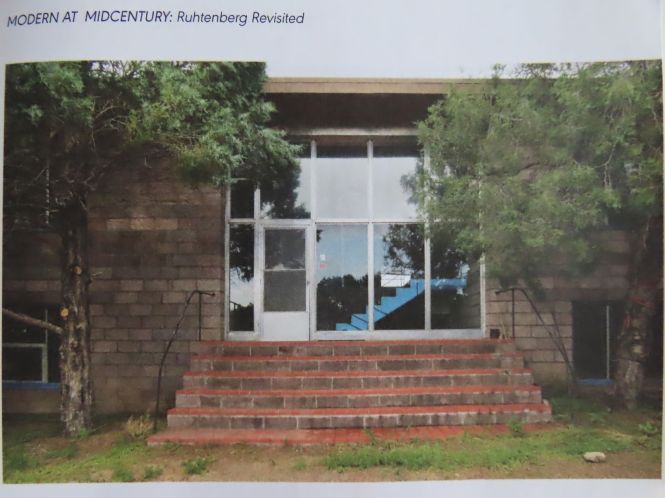
Entrance to the Kane family home. I took a photo of the photo published in Elaine Freed’s book Modern at Midcentury: Ruthenberg Revisited

Kane bedroom. I took a photo of the photo published in Elaine Freed’s book Modern at Midcentury: Ruthenberg Revisited
Peter LaFarge attended the private Fountain Valley School before serving in the US Navy, like his biological father. Following in his stepfather’s footsteps, he worked as a rodeo cowboy for a while, before becoming an actor and, eventually, a singer-songwriter and folk musician. He also shared his birth father’s interest in—and outrage about—the mistreatment of America’s Native tribes. He wrongly claimed or was assumed to have native roots. He wrote music about the trials and tribulations of Indigenous peoples, such as The Ballad of Ira Hayes, about a Marine of Pima descent who was one of the six men who raised an American flag at Iwo Jima only to return home impoverished, forgotten, and spiraling into alcoholism. The song As Long as the Grass Shall Grow talks about the theft of land belonging to the Seneca Nation by the United States for the construction of a dam which flooded the Seneca’s ancestral home.
Legendary musician, Johnny Cash (1932-2003), also claimed native heritage, though he retracted that claim later in life. In 1964, he released an album commemorating the atrocities and injustices committed against America’s First Peoples by the United States, titled Bitter Tears: Ballads of the American Indian for which he faced censorship and backlash, as many Americans did not want to be reminded of this troubled history. Country radio didn’t play the music and Columbia, his record label, didn’t market it. The so-called concept album contained five songs written by Peter LaFarge. Johnny Cash was both disappointed and furious about the album’s (non)reception and took out a full-page add in Billboard magazine, calling DJs and others “cowards and gutless.”
A documentary that first aired in 2016 on PBS, We’re still here: Johnny Cash’s Bitter Tears Revisited, tells the story of the controversy and also chronicles the re-recording of the album on its 50th anniversary, with contributions from musicians including Kris Kristofferson and Emmylou Harris. Here is a link to the film in case you are interested (it is nearly 55 minutes long but is extremely interesting, covering a little-known but important and telling chapter in American music history).
Sadly, Peter LaFarge died of a drug overdose in 1965 when he was only 34. As Johnny Cash’s album proves, Peter’s songwriting was profound. Bob Dylan also knew him and recorded some of his songs. After learning about Peter LaFarge’s circuitous but short life, one can’t help but wonder how growing up near Fountain, Colorado influenced his life’s trajectory, for better or worse.
Peter’s sister, Povy Mathews, attended public school in Fountain, Colorado, Brearley School in Manhattan, and Chatham Hall preparatory school in Virginia. In 1955, she married John Bigbee, a rancher from New Mexico, and the couple has resided and ranched in various locations in that state ever since. Both are still alive in their 90s at the time of this writing.
Wanden died on February 4, 1991 at the age of 88. She was buried in a private cemetery at the ranch, next to her son Peter. Andy Kane was 73 when Wanden passed away. He survived her by 12 years, dying on June 3, 2003 at the age of 85.

LaFarge-Kane Family Cemetery adjacent to Kane Ranch Open Space

LaFarge-Kane Family Cemetery adjacent to Kane Ranch Open Space
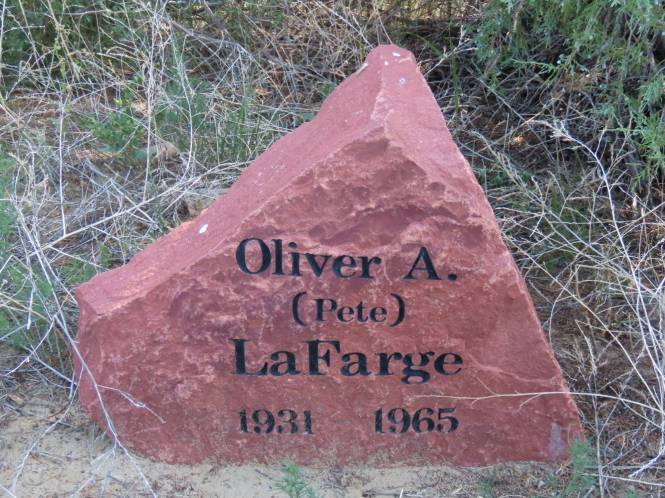
Headstone Oliver A. “Pete” LaFarge, 1931-1965
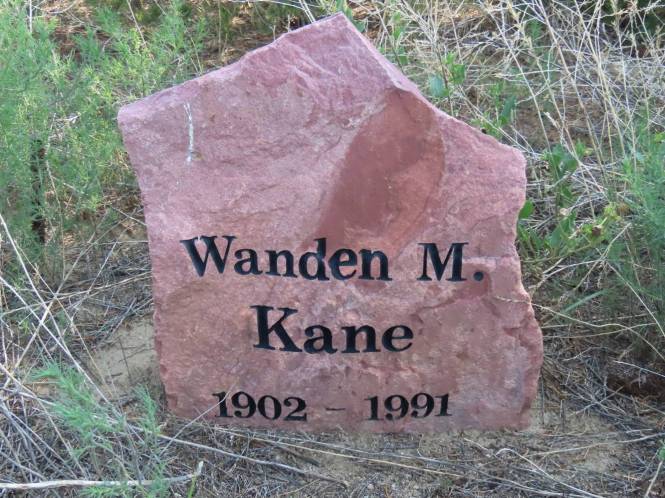
Headstone Wanden M. Kane 1902-1991

Headstone Alexander F. “Andy” Kane 1917-2003
The already remarkable story of this family could have ended here, but thanks to Andy’s vision, and one surmises Wanden’s as well, it grew even more remarkable. The Kane legacy lives on in the land that was bequeathed to the county which we get to enjoy today. Andy’s original wish for a public park almost went unheeded when the county pondered building a veterans’ cemetery on his land but in the end, another site was chosen for the cemetery. Before the open space became reality, a 60 acre parcel was swapped with the new owner of the ranch, because of contamination the county didn’t want to deal with. The parcel also included the ranch house, which subsequently did not become part of the open space and has since been demolished.
At the time of Andy’s death, the Kane estate amounted to $25 million. In a 2006 article in the Denver Post, when asked about the source of this wealth, Louis Johnson, Andy’s friend and lawyer “didn’t think the horse and cattle ranch ever made a dime, but Kane had a fondness for Exxon Mobil stock and he lived as frugally as possible.”
This substantial fortune went into creating the Kane Family Foundation, a “merit-based scholarship program that provides financial assistance to students who attend one of seven colleges and universities in Southern Colorado. The scholarship program, founded in 2006, is one of the largest in Colorado, awarding approximately 1.3 million dollars annually” (according to the organization’s website). Wanden and Andy, despite their dissimilar backgrounds and levels of schooling, both believed in the importance of education and their fortune was put to public use by enabling qualified students to obtain a college degree, with all the benefits attendant thereupon.
While I’m not a recipient of a Kane scholarship, I benefit from the family’s generosity each time I visit wonderful Kane Ranch Open Space, something I will never do again without being mindful of and thankful for how it came about.

 tanja britton
Wow, Tanja, eine sehr interessant und bereichernde Geschichte. Sie versetzt auch meine Gedanken in die Vergangenheit. Danke Dir fürs zeigen. Ernst
LikeLiked by 1 person
Vielen Dank für Dein Interesse und den Kommentar, lieber Ernst. Ich bin immer wieder erstaunt, wie viele interessante Lebensgeschichten es gibt.
Lieben Gruß,
Tanja
LikeLiked by 1 person
Ein interessanter Beitrag !
Geschichte ist immer wieder spannend.
Liebe Grüße Brigitte
LikeLiked by 1 person
Dankeschön, liebe Brigitte. Daß Geschichte immer wieder spannend ist wird mir mehr und mehr bewußt, je mehr ich lerne.
Herzliche Grüße zurück,
Tanja
LikeLiked by 1 person
A pretty history lesson! Thanks for having taken the time to put it into your blog and sharing it with us!
Kindest regards,
Christa
LikeLiked by 1 person
Thank you for your interest and comment, dear Christa. I love learning about and sharing the fascinating lives of individuals. I never fail to be amazed by so many people’s accomplishments.
Best wishes,
Tanja
LikeLiked by 1 person
Oh, Wow, Tanja! This is fascinating. Thank you for sharing this fascinating research. Like you, I love learning the history behind these amazing places. I would’ve liked Wanden, no doubt. What she stood for, accomplished, and Andy’s work and contributions. Peter’s song, Johnny Cash’s history with this song and his heritage, and the fact one of the largest foundation/scholarship program remains is proof that these families did want they set out to do~ allow others to enjoy their abundance and hard work! Bravo! I’d love to visit Kane Ranch! In my Accepting August newsletter, I included a trip to see the boyhood home of Johnny Cash. I’m a fan! Take care, my friend. I appreciate you!
LikeLiked by 1 person
Thank you for your enthusiastic comment, dear Karla. I do remember your post about Johnny Cash and I thought of you when I came across this family’s connection with him.
I would have loved to meet Wanden and ask about her life experiences. No doubt, she was a very wise woman and it’s good to know that her and Andy’s legacy lives on and touches people in so many positive ways. That’s something I dream of and aspire to!
LikeLiked by 1 person
From what I know about you already, my friend, you will leave a wonderful legacy, no doubt!
It’s my blessing when I’m able to be “here” and read your wonderful words. Your research and time is so evident in what you produce! I appreciate it and miss it when I’m not here!
I was really hoping to be in Denver TOMORROW; however, it was my pleasure to help my son move last week and I’ll be gone NEXT weekend and even have a trip planned in September with a girlfriend from college. I’m living life to the fullest, my friend. Or trying my best, anyway. I really was hoping to be out your way and look you up. Here’s to next year! Ironically, my friend from college is headed to Boulder on Sunday, lol. Timing just wasn’t in my favor for this conference. Take care, Tanja. Sending lots of hugs!
LikeLiked by 1 person
Yours might be the nicest words a fellow blogger has ever said about me, Karla. Thank you, I feel very honored. 🙏
Sorry to hear about your change in plans but it sounds as though you have a number of fun events lined up. I hope they all work out to your enjoyment and benefit.
I also appreciate the hugs which I herewith return. 😊
LikeLike
What a great telling of fascinating local history. I’m always amazed at the foresight and generosity of regular folks. Thanks for sharing this history with us and kudos to those who think beyond the moment and better their communities. Great post, Tanja!
LikeLiked by 1 person
Thank you, Tina, it was fascinating to learn about this family and their many contributions and I wish I could have met them in person.
LikeLiked by 1 person
Wow, really interesting! I agree, I think the ranch and open space should bear Wanden’s name too. She was quite accomplished. Thanks for the history lesson!
LikeLiked by 1 person
Thank you, Diana. It was so interesting to learn about this family and its legacy. There is no question in my mind that Wanden was a force of nature and needs to be re-remembered and honored.
LikeLiked by 1 person
Fascinating. Wanden sounds like a feisty character – I would not have liked to get on the wrong side of her. And thank you for the interesting insight into a part of Johnny Cash’s career that I knew nothing about. I’ll check out the film when time allows.
Incidentally, I love your use of the phrase “attendant challenges” in relation to the health and infectious habits of those billeted at Camp Carson. Now that’s what I call a euphemism! 🙂
LikeLiked by 1 person
Thank you, Mr. P. I enjoyed learning about this family, its many connections, and far-reaching legacy. It makes me want to be wealthy in order to do some good on this earth.
LikeLiked by 1 person
Yes, with so much ill-will and disharmony in the world it’s good to be reminded that there are, and have always been, good people out there determined to do good things.
LikeLiked by 1 person
Thank you, Tanja, a fascinating and formidable character – but in a good way.
LikeLiked by 1 person
Thank you, Michael. Fascinating and formidable indeed. I wish I could have met all the individuals in real life.
LikeLiked by 1 person
Wowsah, quite a story and quite a gift to the state! I agree Wanden’s name should be added. And in Wanden’s case, attitude trumps size. Very sorry to read her son died at such a young age.
LikeLiked by 1 person
Well said–attitude does indeed trump size when it comes to Wanden. What a life! I wish I could have sat down with her for a chat.
It is very sad that Peter died so young and one hopes she was able to find some peace about her son’s death.
LikeLiked by 1 person
I’ve known “The Ballad of Ira Hayes” for over 50 years, though from the Patrick Sky recording. Now, thanks to your post, I know something about the songwriter. The song’s subject reminds me of the discussion we had in 2017 about the novel Ramona, by Helen Hunt Jackson, whose memorial I saw southwest of Colorado Springs that summer.
It’s good that you have yet another place in nature to go wandering.
LikeLiked by 1 person
Thank you, Steve, knowing about the history of a place always makes me appreciate it more.
I didn’t know The Ballad of Ira Hayes until I learned about this family and its legacy but the heartbreak behind it makes me very, very sad. Thank you for the link to Patrick Sky’s recording. His rendition is very different from Johnny Cash’s, I think his emphasis is more on the words than the music. Both are equally chilling.
I take heart in the fact that there have always been Americans who have stood up and spoken for this country’s Indigenous peoples and their shameful treatment, Helen Hunt Jackson and Johnny Cash being among them.
LikeLike
Fascinating family… interesting to learn about them. Great post, Tanja!
LikeLiked by 1 person
Thank you, Eliza. Interesting and fascinating perfectly describe my feelings about this family.
LikeLiked by 1 person
[…] lollipop trail, aka balloon trail or, more apropos to this setting, lariat trail (more about Kane Ranch in a future post), traverses the 440-acre area. The string (or handle) portion of the trail leading to the 0.7 mile […]
LikeLike
Thank you for your informative post about Colorado’s history and the legacy of Kane-LaFarge. What beautiful blend of art, music, literature, and education; and public land for present and future generations to enjoy.
LikeLiked by 1 person
Thank you for your interest, Maria. And for your comment, which perfectly summarizes all this family represents.
LikeLiked by 1 person
My goodness such history here! Wonderful written and photographic documentation! And a bonus mention of Baháʼí Faith. I visited the temple here near Chicago a little while ago! 🙏
LikeLiked by 1 person
I appreciate your kind comment, thank you. It was fun learning about this family and their legacy.
Until your mention of the Baháʼí temple I had completely forgotten that I went there once many, many years ago, during a visit to a friend who lived in Chicago. Thank you for the reminder!
LikeLiked by 1 person
What an interesting woman Ester was! She was ahead of her time – it couldn’t have been easy being a divorcee in 1937. I have some pioneer ancestors who challenge me to live life to the full. Somehow I end up watching Netflix and blogging…😉
Great post, Tanja. I loved the simple gravestones.
LikeLiked by 1 person
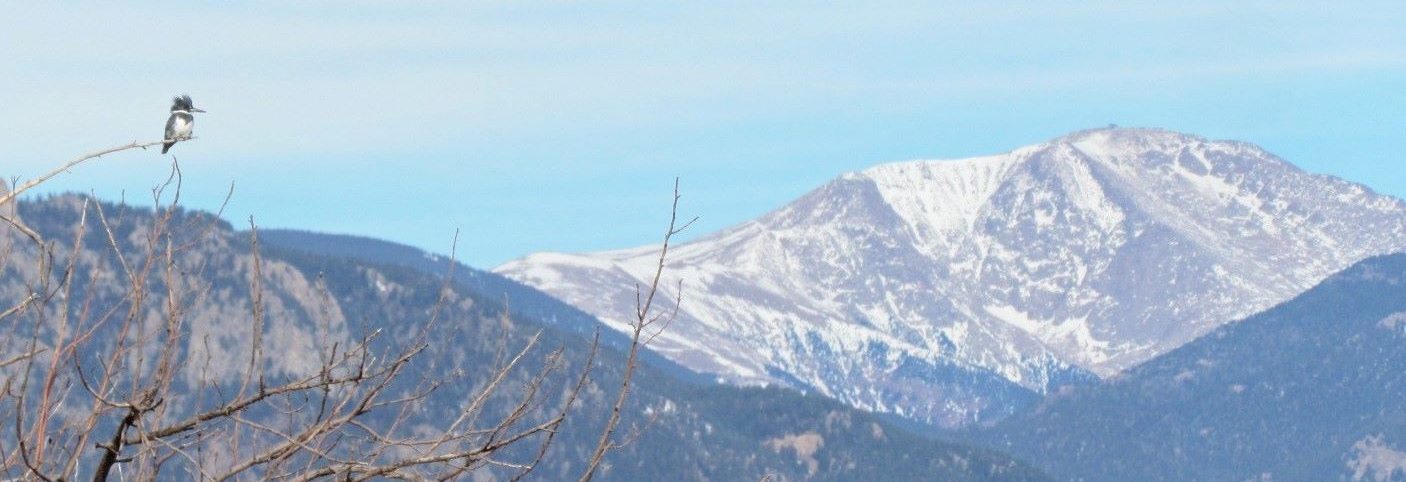
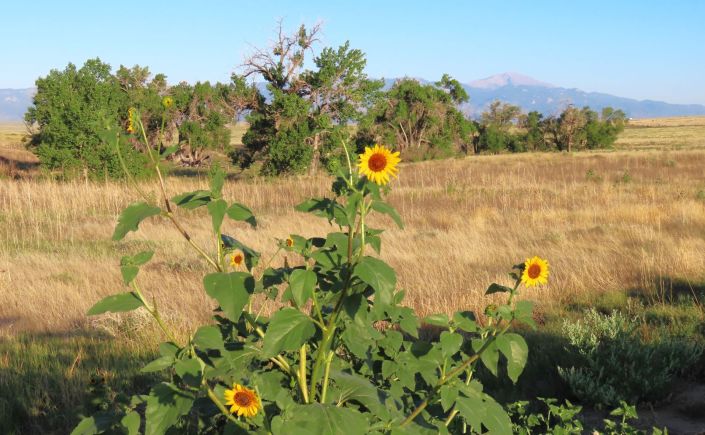
Thank you, Kerry. I’m completely enthralled with Wanden/Esther’s life, wish I could have met her. I also loved the family’s gravestones and especially their location in the middle of the prairie with a view similar to the one shown in the first photo.
As far as living life to the fullest, that takes on different expressions at different stages in our lives, I think. And if we are content, that’s ok. If not, maybe we should try to change something.
LikeLiked by 1 person
You make a good point, Tanja. I have been more adventurous at different stages of life.
LikeLiked by 1 person
I haven’t thought of Oliver La Farge in ages. When I was in fourth grade, our teacher read to us for a half hour every day. We went through Laura Ingalls Wilder’s “Little House” series and an assortment of other books, including “Laughing Boy.” A collection of his papers and memorabilia is held at the Harry Ransom Center at the University of Texas.
In many ways, Wanden reminds me of Texas ranch women I’ve known. Competent and creative as ranchers, they often played outsized roles in historic preservation over the years, not to mention promoting the need for conservation of both land and species. Wanden also brought to mind Georgia O’Keeffe’s experience with male artists on the east coast, many of whom weren’t at all confident she was a proper painter. It’s interesting that both of them abandoned the east coast for life in the west — which makes perfect sense to me!
LikeLiked by 1 person
I imagine you are one of a select group of people to have ever heard of Oliver LaFarge, Linda. I certainly hadn’t before I learned about Wanden.
Your experience proves the profound influence teachers can have on our lives.
I can also relate to why some women came (and still come) west in search of wider horizons and mindsets.
LikeLiked by 1 person
Das ist eine ausführliche Beschreibung und Geschichte, die gut recherchiert ist und die ich in aller Ruhe lesen mußte.
Danke dafür
Liebe Grüße
Maren
LikeLiked by 1 person
Danke für Dein Interesse, lieber Maren. Dieser Beitrag war länger als die meisten doch ich fand die Information so faszinierend, daß ich sie weiterleiten wollte. Es gibt so viele interessante Menschenschicksale!
Liebe Grüße,
Tanja
LikeLiked by 1 person
Wanden sounds like a fascinating and impressive woman. I agree with you over the naming of the road – her name should have been commemorated in it too!
LikeLiked by 1 person
Thank you, Ann, one can’t help but be impressed by Wanden’s accomplished life.
I’m not sure why the road was named for Andy only, maybe because he outlived Wanden and he was the one to donate the land in the end. I will always think of the open space and the road as representing the entire family.
LikeLiked by 1 person
That’s a good way to think of it!
LikeLiked by 1 person
As always, I thoroughly enjoyed your post. I greatly appreciate your research into the stories and people behind the places. So many fascinating people who have been influential in their own right (especially women) have been generally ignored and thus forgotten. Wanden would have been truly interesting to meet and it sounds like she made a good choice of a partner the second time around.
LikeLiked by 1 person
Thank you for your kind comment, it make me very happy to know that you enjoyed this post.
I love learning people’s life stories and finding fascinating tidbits. Wanden seems to have been a force of nature and it would have been very stimulating to talk with her about her life experiences.
Best wishes,
Tanja
LikeLike
East Indian languages are a testament to the region’s rich historical, literary, and cultural diversity. With centuries of development, these languages continue to play a central role in shaping the cultural and social identity of the region, preserving a legacy that spans generations.
https://www.indianetzone.com/39/east_indian_languages.htm
LikeLike
Thank you so much for all the family history, well told. If you need any more, I am still right here with my husband, John F. Bigbee, on our irrigated farm in southern New Mexico. I am Oliver La Farge’s daughter, proudly raised by Andy Kane, who showed me how to ride a horse and rope a calf. I graduated from CSU in 1955 with a degree in Animal Science and a minor in Philosophy. John and I married 70 years ago this November, and began running Bigbee Brothers Cattle Company., Encino, New Mexico. The main ranch covered 100,000 acres. John served in the New Mexico State Legislature for 14 years, and was later Assistant State Land Commisioner. I served on the Livestock Board two different terms and accepted a Presidential Appointment to the National Commission on Agricultural Policy. We produced the outline for the Congressional Ag Committee to write, and finally pass, the Farm Bill in 1994. We need a new one! Thanks, Povy La Farge Bigbee.
LikeLike