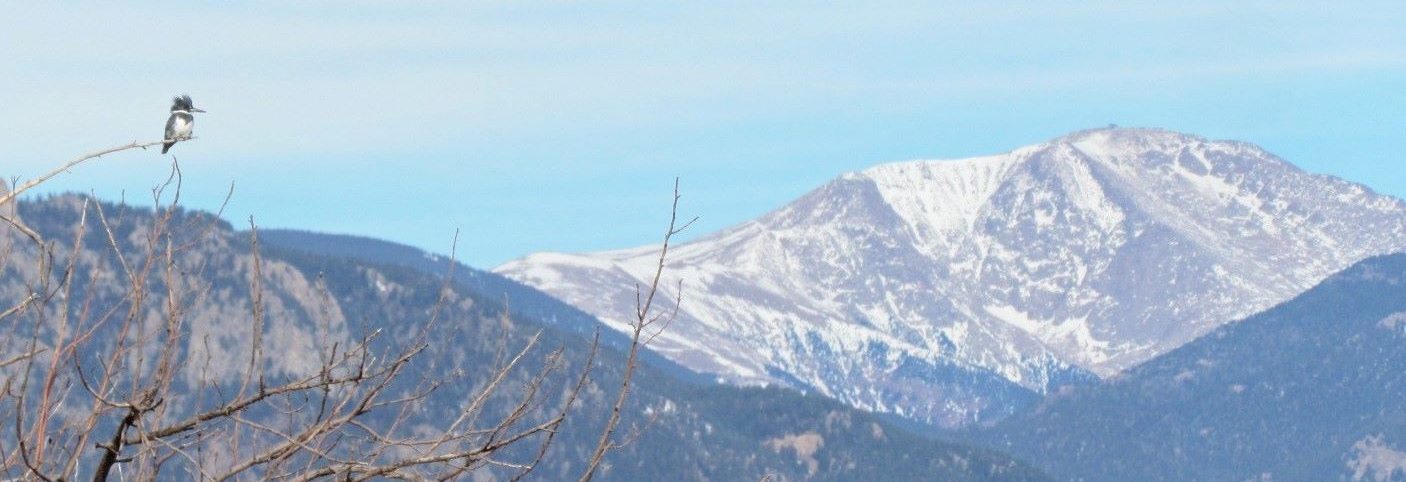

World Wetlands Day has its origins in the 1971 Convention of Wetlands and started to be celebrated officially in 1997 each February 2, the anniversary of the original convention. Since 2021, it has also been adopted by the United Nations.
From the World Wetlands Day website comes the following information:
Nearly 90% of the world’s wetlands have been degraded since the 1700s, and we are losing wetlands three times faster than forests. Yet, wetlands are critically important ecosystems that contribute to biodiversity, climate mitigation and adaptation, freshwater availability, world economies and more.
It is urgent that we raise national and global awareness about wetlands in order to reverse their rapid loss and encourage actions to conserve and restore them.
World Wetlands Day is the ideal time to increase people’s understanding of these critically important ecosystems.
In honor of the day, I am revisiting two of my favorite wetlands, one in Colorado, another in Germany. Wetlands are wondrous places that are alive not only with a plenitude of plants but also an ample array of animals, including all five classes of vertebrates: fish, amphibians, reptiles, birds, and mammals.
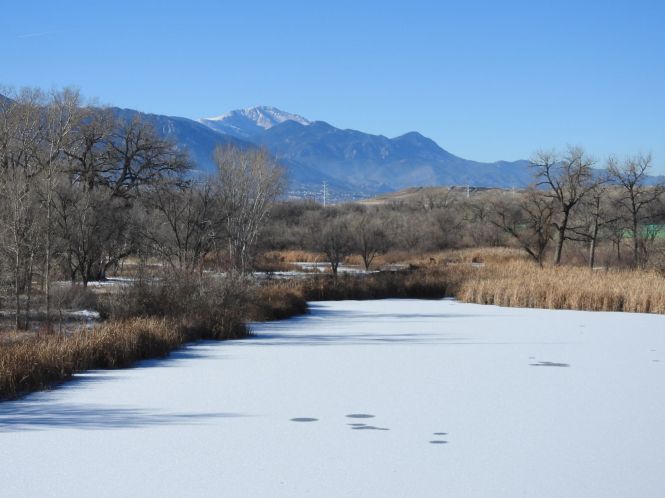
Fountain Creek Regional Park, Colorado, USA. Similar view as in the featured photo above. Even in winter, life continues above and underneath the ice.
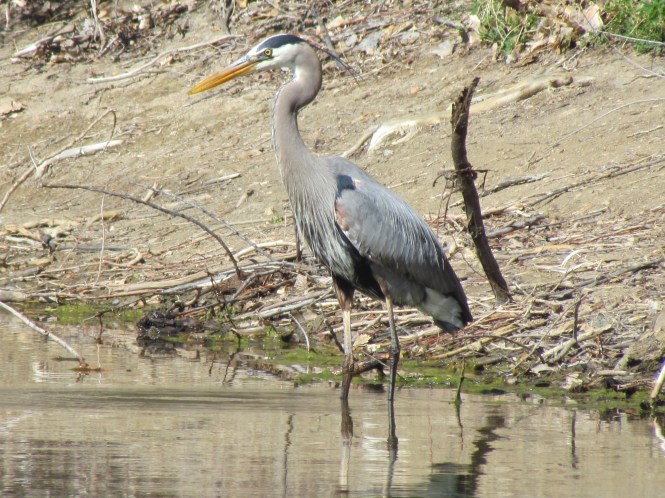
Great Blue Heron/Kanadareiher (Ardea herodias)
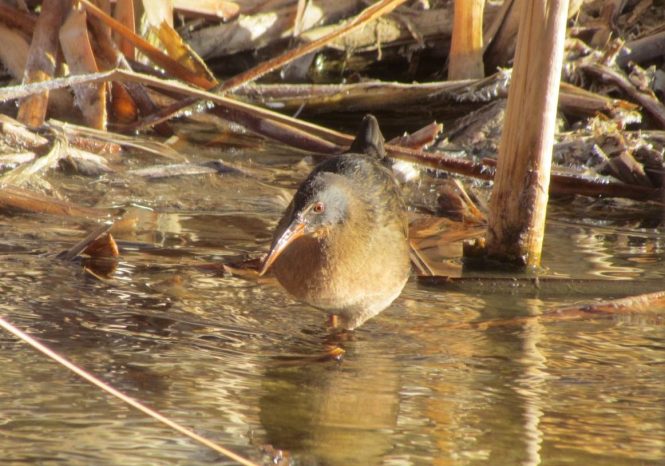
Virginia Rail/Virginiaralle (Rallus limicola)
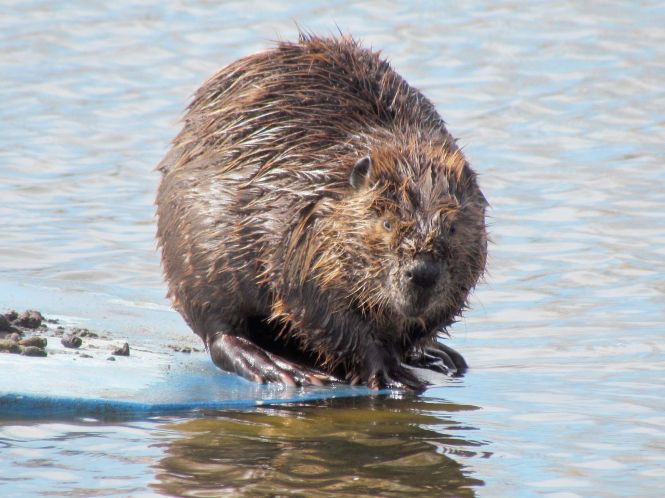
American Beaver/Amerikanischer Biber (Castor canadensis)
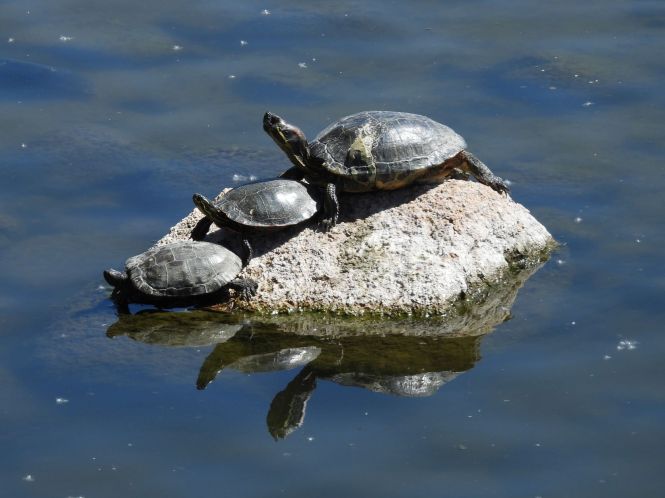
Painted Turtles/Zierschildkröten (Chrysemis picta)
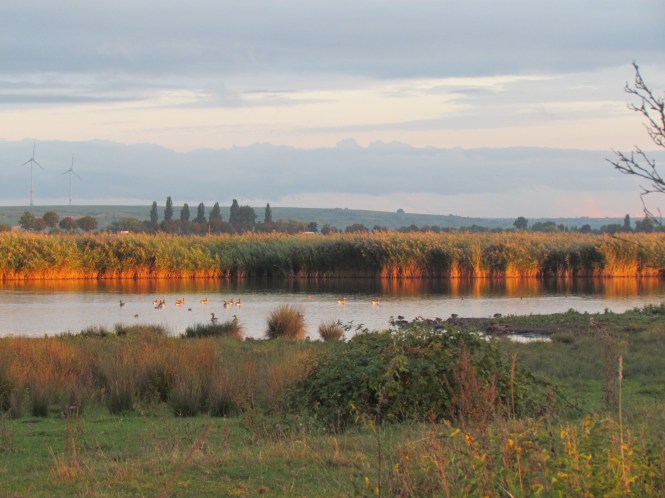
Rohrwiesen am Seegraben, Rhineland-Palatinate, Germany
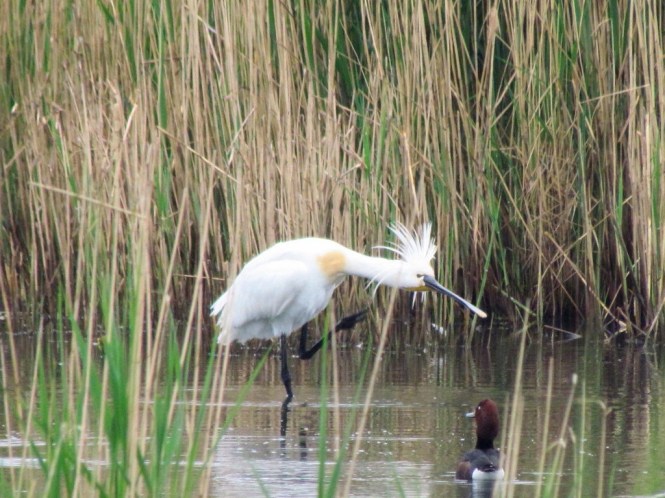
Eurasian Spoonbill/Löffler (Platalea leucorodia), being observed by a Common Pochard/Tafelente (Aythya ferina)

Common Kingfisher/Eisvogel (Alcedo atthis)
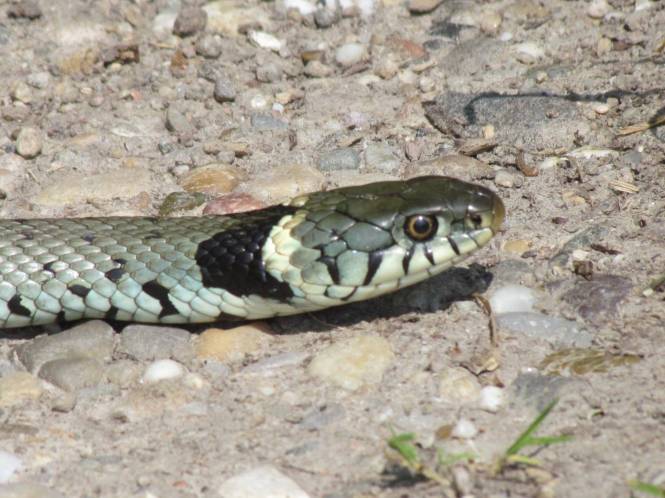
Ring Snake/Ringelnatter (Natrix natrix)
Let us help preserve and protect our existing wetlands, and let us attempt to restore those wetlands we have destroyed in the misguided belief that they were useless and could be turned into more “profitable” land.
What will it take for us to learn to heed nature’s ways and wisdom?
 tanja britton
Hello dear Tanja,
Thank you for raising awareness for World Wetlands Day. I am dismayed (but not surprised) that so many regions took the wetlands for granted..even worse, mistakenly thought them to be useless.
It is the same story in Japan. The 1970s were the peak of wetlands being drained and plowed over to make profitable land. The few wetlands that remain are the result of decades long effort of “normal” people who were brave enough to fight against the government. It’s why I have such a soft spot for wetlands and migratory shorebirds. I often wonder, if our avian friends could speak our languages, what would they say?
Excuse the rambling, your post touches me deeply as always. And, happy to say I can recognize the birds in Germany.
Wishing you a lovely day!
LikeLiked by 3 people
Thank you for your heartfelt comment, dear Takami. I have often had the same question about birds and other creatures looking at the world and wondering what has happened to all the places that used to be so welcoming and nourishing for them and that have since then been destroyed. I often apologize for stealing from them.
I’m sorry to hear about the loss of wetlands in Japan. I always thought that it was still more invested in preservation over profitability than some Western nations. I guess the sad truth is that humanity everywhere has lost its compass for what is truly important.
Take care,
Tanja
LikeLiked by 1 person
We have wetlands and swamp areas in great quantities in Finland and try to preserve them. The Eurasian spoonbill is awesome!
LikeLiked by 2 people
Thank you for your comment. I’m so glad to hear that there is at least one country that cares about what happens to wetlands and preserves them.
I have only seen this one Eurasian spoonbill in my life, but it left a lasting impression. 🙂
LikeLiked by 1 person
This post, and your wonderful photos, reminds me that wetlands are my favourite place to watch birds, as well as the occasional mammal, reptile and amphibian. Some good work goes on here to protect/restore fragments of wetland, and although things could be much better they could also be a lot worse. Long may the good work continue!
LikeLiked by 1 person
Thank you for your comment. Mr. P. I also love to spend time in wetlands, they have so much to offer.
I’m glad to hear that there are efforts underway in the UK to help restore some of these wetlands and I second your wish for the success of those undertakings.
LikeLiked by 1 person
Great post and wonderful photos 🌹🌹🌹
LikeLiked by 1 person
As always, I appreciate your supportive comment, dear Luisa. Thank you! 🙏
LikeLiked by 1 person
You’re more than welcome, Tanja 💝
LikeLiked by 1 person
🙏
LikeLiked by 1 person
Perhaps you can start a campaign to extend World Wetlands Day to the even more alliterative World Wetlands Week.
Der Kanadareiher ist auch ein Texasreiher und sogar ein Austinreiher.
LikeLiked by 1 person
World Wetlands Week definitely sounds good, but World Wetlands Century makes even more sense, even if less alliterative. It probably would take at least a century to restore as many wetlands as possible, but that would be a worthwhile effort for humanity.
It’s nice to know that der Kanadareiher doesn’t care about borders or about a confining name given to him haphazardly.
LikeLike
The size of the human population is out of control. The more people there are, the more there is damage to the natural world. There were three billion humans when I was young. Now there are over eight billion, with no end in sight.
LikeLiked by 1 person
You are absolutely right, Neil. Everybody knows this, but we seem unable to address this problem.
LikeLiked by 1 person
I left a comment, but it didn’t seem to post, so sorry if this is a duplicate. Anyway, I said I love the spoonbill and his crazy ‘hairdo’ 😊 Maggie
LikeLiked by 1 person
Thank you for going to the trouble of commenting twice, Maggie (the first message did not show up).
This is the only spoonbill I have ever seen thus far and I also love that fun hairdo.
Best,
Tanja
LikeLiked by 1 person
I had no idea there was a Wetlands day, thanks for the education. Needless to say I spend a LOT of time in and about the various Wetlands across this country and an definitely say they are a national treasure that must be preserved. Thanks for the shots of the birds across the pond – aspirational for sure – I joke about you not getting to the T -state, but in truth you have me on the international front ha.
LikeLiked by 1 person
Thank you for your comment, Brian. Wetlands are also among my favorite places to bird (apart from grasslands/prairie), they provide so many habitats and serve soo many other indispensable functions.
Birding in Germany is always fun. I wasn’t a birder before I left the country, so each trip back brings many new avian discoveries.
LikeLiked by 1 person
The more alliterative would seek to include the World herons, not just Texan. Schmuckreiher, Marmorreiher, Streifenreiher, Cocoireiher, Mangrovereiher, Grünreiher, Graureiher, Purpurreiher, Nachtreiher, Rallenreiher, Dreifarbenreiher, Silberreiher, Seidenreiher, and Kuhreiher, among others.
LikeLiked by 1 person
Thank you for your comment, Maria. The variety of egrets and herons is wonderful, isn’t it. I love all these long-legged beauties.
LikeLiked by 1 person
Yesterday I watched a documentary on Easter Island known for its colossal and mysterious statues. Scientist found out that the civilization that created these giants collapsed because they cut all the trees to use them for transporting the massive stones. The conclusion was that by exploiting the earth we are doing the same thing to the entire planet on which we depend on for our survival. Your excellent post on the marshlands compelled me to write this comment, Tanja.
LikeLiked by 1 person
Thank you for your comment, dear Peter.
It’s very sobering, isn’t it, that there are plenty of examples that prove how our thoughtless exploitation of our world’s resources leads to mayhem, yet we continue to refuse to learn from them. What does that say about homo so-called sapiens?
LikeLiked by 1 person
The kingfisher. Beautiful capture.
LikeLiked by 1 person
Thank you for your comment. Kingfishers are amazing birds.
LikeLike
Hi, Mrs. Tanja-
What beautiful photos!! I especially loved the Common Kingfisher and the American Beaver.
Thank you for sharing this special day that I would have otherwise not known of.
-Gavin
LikeLiked by 1 person
Thank you for your comment, Gavin. I’m glad that some of the creatures here particularly appealed to you. Texas has many wetlands that are incredibly important for migratory birds. Maybe you will get an opportunity to see some of them, or maybe you already have. I have been dreaming about visiting the Texas coast for many years to see its many wonderful winged wonders.
Best wishes,
Tanja
LikeLiked by 1 person
I also think that the wildlife in Texas is beautiful and I definitely take it for granted. I hope that you are able to visit it soon. We would love for you and Mr. Mike to stop by when you do come! 🙂
LikeLiked by 1 person
Thank you, Gavin, we appreciate the invitation!
LikeLiked by 1 person
90% loss is so shocking… ugh, it breaks my heart what humans have done to this planet, our only home!
LikeLiked by 1 person
My heart is as broken as yours, Eliza . . . 😢
LikeLike
Beautiful photos, Tanja! I am proud that Maryland and its many groups of supporters team up to save and protect our eastern shore wetlands and islands, to preserve for nature and wildlife. In Maryland, if you live within 1000 ft of the bay or any of its tributaries (I do), you cannot cut down a tree for any reason without planting another tree somewhere else on your property. Very strict, if you get caught, you are fined and forced to replace what you removed. It’s part of protecting our shorelines and how they feed the creeks and wetlands further inland. Disrupting the shorelines can cause irreversible inland damage for miles. 😢
LikeLiked by 1 person
Thank you for your comment, Donna.
And for sharing Maryland’s enlightened attitude towards preserving wetlands and shorelines. So many people have learned the hard way the detrimental effects of a loss of wetlands, yet there doesn’t seem enough concern or political will to reverse some of our own mistakes, at least not on a large enough scale.
I’m glad you get to live in such a beautiful environment.
LikeLiked by 1 person
The good news is that increasing attention is being paid to the issues, and concrete efforts are being made to reverse some of the damage that’s been done. I’ve spent time in Terrebonne Parish in Louisiana with a woman deeply involved in wetland restoration there, and have taken trips with her into Lake De Cade and Bayou De Cade. This news report made my heart happy, and it’s only one of the efforts — many even larger scale — that have been undertaken to slow or reverse the land loss there. My hope is that I’ll get a chance to revisit the area this year, to see the progress for myself. Of course, as valuable as that would be, any reason to visit Louisiana is a good one!
I’d never thought about the fact that all five classes of vertebrates are present in wetlands. Fish, reptiles, birds, and amphibians are obvious, but mammals stopped me, until I remember our nutria, marsh rabbits, raccoons, and marsh rats. And of course there are insects and mollusks, as well — even though they fall outside the category of vertebrate, they’re critical parts of the food chain.
What a lovely post — especially that photo of the unutterably cute beaver!
LikeLiked by 1 person
Thank you for your comment, Linda. And for sharing the link to the encouraging restoration work in Louisiana. I have often wondered how much less devastating some hurricanes might have been had the wetlands along the Gulf Coast not been destroyed.
One can only hope that NOAA and other federal agencies concerned with protecting the environment won’t come into the crosshairs of the slasher-in-chief.
LikeLiked by 2 people
Beautiful pictures! I, too, love wetlands. I agree with Neal that there are too many of us.
LikeLiked by 1 person
Thank you, Laurie. Wetlands are among my favorite natural places to visit; nowhere else is there such a rich variety of life.
Like many problems facing humanity, overpopulation is one we know about but don’t seem willing or able to address.
LikeLiked by 1 person
Ja, wir nennen den Tag: Welttag der Feuchtgebiete. am 2.2. ich habe auf facebook dazu ein Bild gebracht, aus dem Teufelsmoor mit den seltenen blauen Moorfröschen. Gedacht habe ich jedenfalls daran. Hatte aber keine Zeit für einen Blogbeitrag. Deine Bilder sind so wunderschön. Ich bin wie immer schwer begeistert und Deine Worte sind eine mahnende Erinnerung daran, dass wir auch unsere Welt und unsere Natur aufpassen müssen. Es gibt leider mächtige Menschen, die wollen lieber drill, drill, drill und nicht Natur pur. Erst wenn der letzte Baum gerodet, der letzte Fisch gefangen, wirst du merken, dass man Geld nicht essen kann. Sollte über dem besagten Haus in Washington stehen.
Die Cree haben das schon vor mehr als 100 Jahren erkannt.
LG
Maren
LikeLiked by 1 person
Danke für deinen Kommentar, liebe Maren. Auf Facebook bin ich leider nicht, sonst würde ich nach deinem Bild schauen. Doch erinnere ich mich gut an Deinen Blogbeitrag über die wunderbaren blauen Moorfrösche, deren Bekannntschaft ich bei Dir zum ersten Mal gemacht habe.
Danke auch für das Zitat. Es beweist mal wieder, daß die Menschheit Meister in der Verdrängung ist. Viele naturnahe Völker haben diese Wahrheiten schon lange erkannt, doch im Namen des Fortschrittes haben wir sie ignoriert, zum großen Nachteil aller Lebewesen dieser Erde. Es ist unglaublich ernüchternd . . . 😢
Sei herzlich gegrüßt,
Tanja
LikeLiked by 1 person
According to Wikipedia, “A Ramsar site is a wetland site designated to be of international importance under the ‘Ramsar Convention’, also known as “The Convention on Wetlands”, an international environmental treaty signed on 2 February 1971 in Ramsar, Iran, under the auspices of UNESCO. It came into force on 21 December 1975, when it was ratified by a sufficient number of nations. It provides for national action and international cooperation regarding the conservation of wetlands, and wise sustainable use of their resources. Ramsar treaty participants meet regularly to identify and agree to protect “Wetlands of International Importance”, especially those providing waterfowl habitat.”
LikeLiked by 1 person
A wetland can be considered internationally important if any of the following nine criteria apply:
* Criterion 1: “it contains a representative, rare, or unique example of a natural or near-natural wetland type found within the appropriate biogeographic region.”
* Criterion 2: “it supports vulnerable, endangered, or critically endangered species or threatened ecological communities.”
* Criterion 3: “it supports populations of plant and/or animal species important for maintaining the biological diversity of a particular biogeographic region.”
* Criterion 4: “it supports plant and/or animal species at a critical stage in their life cycles, or provides refuge during adverse conditions.”
* Criterion 5: “it regularly supports 20,000 or more waterbirds.”
* Criterion 6: “it regularly supports 1% of the individuals in a population of one species or subspecies of waterbird.”
* Criterion 7: “it supports a significant proportion of indigenous fish subspecies, species or families, life-history stages, species interactions and/or populations that are representative of wetland benefits and/or values and thereby contributes to global biological diversity.”
* Criterion 8: “it is an important source of food for fishes, spawning ground, nursery and/or migration path on which fish stocks, either within the wetland or elsewhere, depend.”
* Criterion 9: “it regularly supports 1% of the individuals in a population of one species or subspecies of wetland-dependent non-avian animal species.”
LikeLiked by 1 person
Thank you, Maria. I read about this also.
LikeLiked by 1 person
Thank YOU for the information! Elon Musk has also done a lot of harm with Tesla. The environmental impact of lithium-ion batteries on the environment is something that he has not solved with his electric cars and products. Practices such as mining are resource-intensive and can require water usage, habitat destruction, and chemical contamination. Moreover, Elon Musk’s company SpaceX has been criticized for its environmental impact, including greenhouse gas emissions, water pollution, and air pollution.
LikeLiked by 1 person
“Water pollution: SpaceX’s launches have discharged tens of thousands of gallons of wastewater into wetlands near its launch site.”-NPR
LikeLiked by 1 person
It’s so wrong that we still allow industrial pollution. I’m afraid environmental laws will only suffer under the current administration and instances like the one you referenced will repeat themselves. How depressing.
LikeLike
It’s awful that we have damaged almost 90% of the world’s wetlands. Here wetlands are on a much smaller scale but are nevertheless important to wildlife and there are nature reserves on many of these areas. I was brought up beside an area in Scotland called the ‘Flow Country’, which we regarded as a vast and barren area of peat bogs. At the time we didn’t understand its importance as the largest blanket bog in Europe and a unique ecosystem full of life. Now it is protected but it suffered in the past by having areas drained for forestry. We are learning, but slowly!
LikeLiked by 1 person
Thank you for your comment, Ann, and for sharing an example of a wetland in Scotland. Words like “barren,” “worthless,” or “wasteland” were (and, incredibly, still are!) often applied by people who only see dollar signs when they look at “undeveloped” land.
Yes, we (at least some of us) learn, but as is obvious from the many disasters that are multiplying, not fast enough. 😢
LikeLiked by 1 person
Yes, definitely not fast enough…
LikeLiked by 1 person
Very nice Tanja. I smiled at the “Turtles all the way down” photo. I’m learning that even though Colorado seems to be all mountains and arid desert, there are wetlands scattered about. The precious few wetlands are very important to the animal residents you highlighted.
LikeLiked by 1 person
Thank you, Brad. You are absolutely right about the existence of important wetlands in Colorado. The greater Denver area has some wonderful examples, both natural and man-made, and when you are in the area, I hope you will get a chance to explore them.
LikeLiked by 1 person
It depresses me horribly also. 😞
LikeLiked by 1 person
We know better, and should do better!
LikeLiked by 1 person
Great shots!
LikeLiked by 1 person
Thank you, Sharon. Not as spectacular as your Short-eared Owl collection, though! 😊
LikeLiked by 1 person
These are wonderful. The best way to get them is via kayak. It is hard to get the wetlands birds. I have yet to see the kingfisher they have in England. We only have the belted one here. Sankes I have no desire to get close to , ha! The beaver is cool! They are very skittish here. You are very unlikely to see them, except at a great distance.
LikeLiked by 1 person
Lovely photos Tanja
LikeLiked by 1 person
Thank you very much, I’m glad you think so.
LikeLiked by 1 person
Thank you, Tanja. The area I live in was an extensive wetland until the seventeeth century when it was drained to reclaim land for agriculture. Recently though, a lot of the drainage and pumping has been let go – not sure why (but I suspect budgets), so the wetland is beginning a slow return, with seasonal flooding. It’s interesting to watch – it was a quite a sterile landscape, not much bird or plant variety, but I’m hopeful it will pick up in the coming years. (without the snakes, I hope – we’re not used to snakes in the UK)
LikeLiked by 1 person
Let’s hope that the wetland will be allowed to return, and with it many of its original critters (but definitely no introduces snakes!).
LikeLiked by 1 person