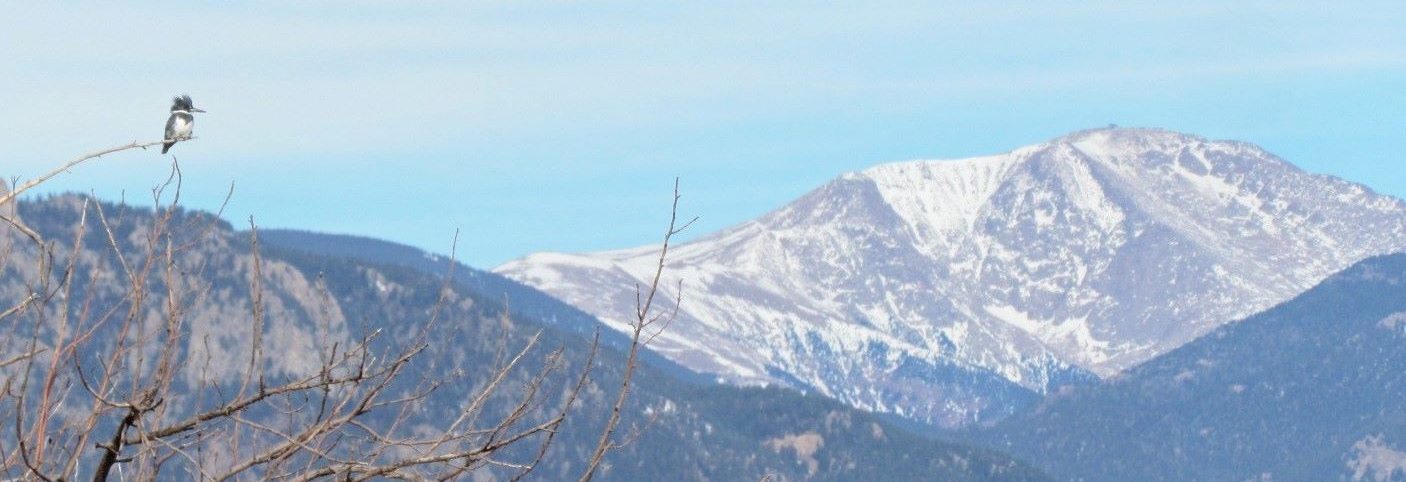
Dear Mrs. and Mr. Oriole,
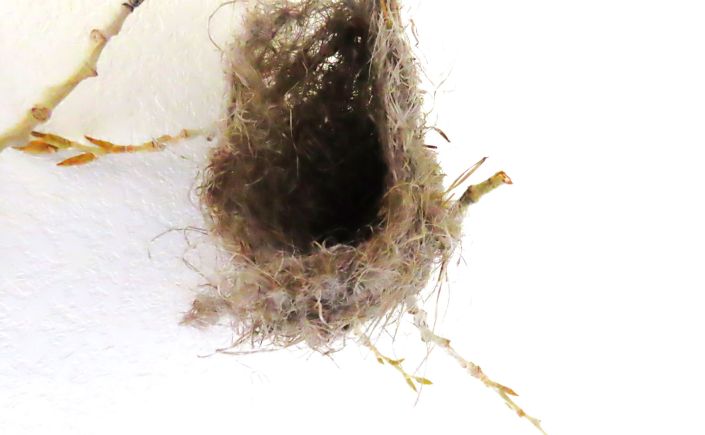
I regret to inform you that your home, beautiful and sturdy though it was, fell victim to this winter’s storms. I recently found it in a dry creek bed at the foot of the cottonwood tree where you had so laboriously affixed it to a number of branches. My heart sank when I saw it sitting on the sandy ground, still attached to the twigs that used to hold it in place in the canopy.
I imagined how you carried nesting material and wove it strand by strand into the growing structure which, to the human observer, seems to resemble a sock. How you spent day after day, possibly up to 15, to make it just so. And how you then lined it with fluffy material so your eggs would be bedded softly.
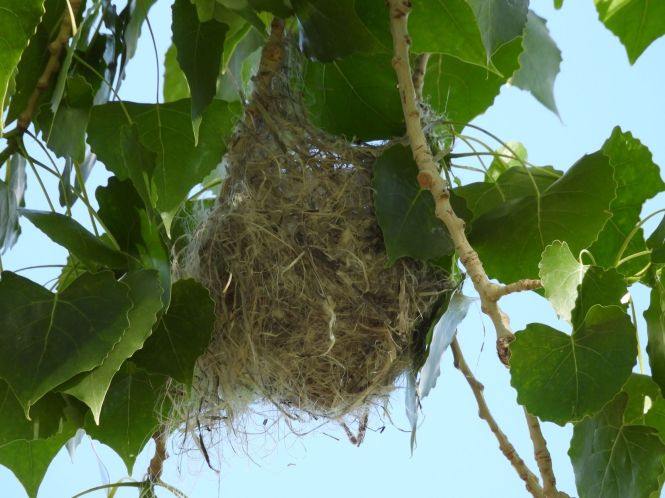
What the nest might have looked like while suspended in a cottonwood tree
How you, Mrs. Oriole, lay 3 to 7 of those pale blue or grayish white ovals, then sat on them for two weeks until your chicks were born, dependent on you for warmth and food for two more weeks to come. How both of you indefatigably carried insects and other arthropods to the nest, complemented by the pulp of an orange or grape jelly that bird lovers such as myself provide in their gardens. Until your brood was ready to fledge and explore on their own.
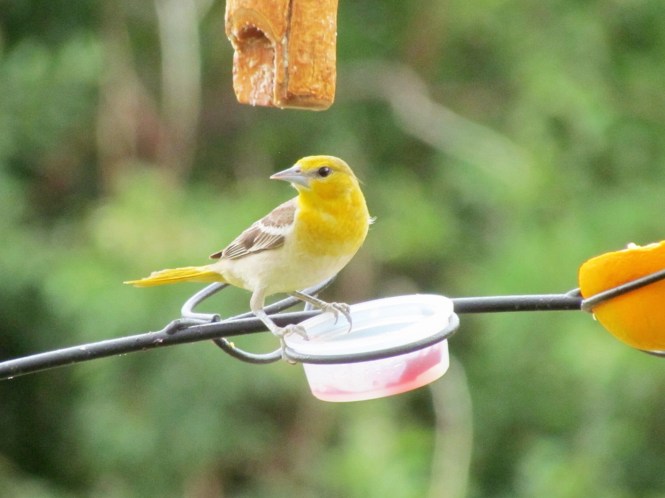
Mrs. Bullock’s Oriole/(Icterus bullockii)/Frau Bullocktrupial
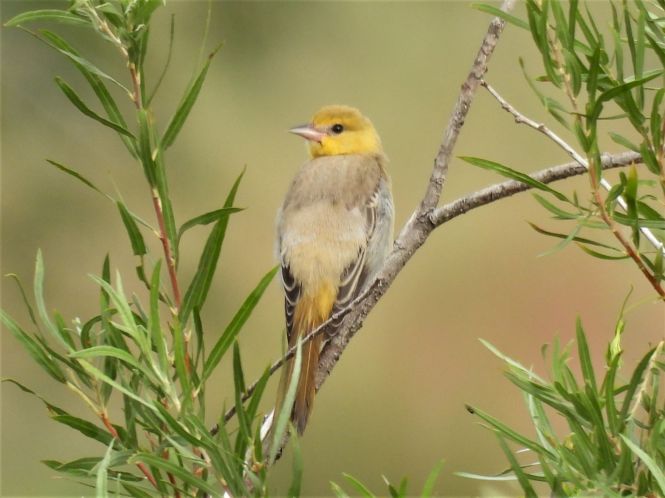
Juvenile Bullock’s Oriole (Icterus bullockii)/Bullocktrupialjunges (note the pink beak and fluffy feathers)
It’s nearly the end of March and I hope my lines will reach you in Mexico, where you have been spending your winter. If previous years are any indication, you will return to Colorado by the first week of May, though once you made an appearance in our garden as early as April 30. I hope you and your well-tended offspring had a propitious winter in more clement conditions and I bid you safe travels on your journey to your summer destination at the foot of the Rocky Mountains.
I wish you could have returned to find your old nest in need of only minor remodeling, but I’m afraid you will have to start another one from scratch this year. Please take this into consideration as you plan your return trip.
I can’t wait to see you again. The months since your departure have seemed very long. You will bring welcome chatter and color and commotion, and we will be happy to keep you provisioned with peanut suet and oranges and grape jelly to your heart’s content.
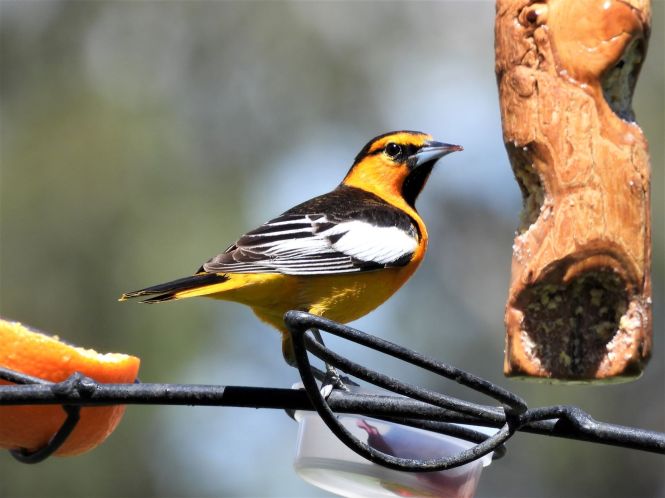
Mr. Bullock’s Oriole (Icterus bullockii)/Herr Bullocktrupial
With my best wishes,
Your friend from Colorado
PS: In case you reply to this missive, it might take me a couple of weeks to respond, as I likely will be out of town. Thank you for your understanding.
🧡 🧡 🧡 🧡 🧡 🧡 🧡 🧡 🧡 🧡 🧡 🧡 🧡 🧡
PPS: According to Cornell’s All About Birds:
The Bullock’s Oriole [the oriole species common in the western US] was described and named by William Swainson in 1827, drawing on material collected by English father-and-son naturalists William and William Bullock in Mexico.
In the Great Plains, where their ranges overlap, Bullock’s and Baltimore Orioles frequently hybridize. The two species were lumped together for a while as the Northern Oriole. Genetic research has since determined, however, that they are not very closely related.
 tanja britton
They will be back! 😃👍👍👍👍👍👍👍
LikeLiked by 2 people
I hope so!
Thank you for your comment!
LikeLiked by 1 person
A wonderful message and fabulous photos ❣️
LikeLiked by 1 person
Thank you, dear Luisa. Much appreciated. 🙏
LikeLiked by 1 person
You are so very welcome my dear Tanja 🩵
LikeLiked by 1 person
Tanja, I enjoyed reading this post so much. Hoping the orioles relocate close by. 😉
LikeLiked by 1 person
That makes me happy, Pepper. Thank you so much!
LikeLiked by 1 person
Are any Bullock or Baltimore members still “pure,” or are all hybrids to some extent?
LikeLiked by 1 person
From what I understand, hybridization happens only where the two species overlap. In their normal ranges, most of them are probably still “pure.”
LikeLiked by 1 person
Have you thought about intervening and reaffixing the nest to the branches from which it fell? That would at least be a head start for the orioles to refurbish the old nest rather than having to start all over.
LikeLiked by 1 person
That’s an interesting question. I assume it could be done, but whether they would accept it is questionable. Also, I would have to carry a long ladder for about 1/4 mile and then climb into a tall cottonwood tree. Not something I could do by myself.
LikeLike
What a beautiful letter to this Oriole couple and their little ones. Before your photos I had never seen a nest like this and it does look really well made and cozy inside. My grandmother always used to talk about how impressed she was, at the way birds could create a home with just their mouths (something we could never do) and this lovely post reminds me of that very thing. 🪹
LikeLiked by 3 people
Thank you, Julie. Birds are remarkable creatures on many levels and their nests likewise are remarkable creations. I’m so glad you enjoyed this post.
Happy birding!
LikeLiked by 1 person
Great photo essay on the oriole bird in your neck of the woods, Tanja! By the way, I enjoyed reading your conversation you had with Steve on my blog. Thank you!
LikeLiked by 1 person
Thank you, Peter, I’m glad you enjoyed my photos and letter to the orioles.
I hope you enjoyed your family time. Please don’t ever feel that you have to apologize for not getting to your blog comments right away, it happens to all of us.
LikeLiked by 1 person
I love this note to your oriole friends. I hope they build a new home where you can still enjoy them, Maggie
LikeLiked by 1 person
Thank you for your comment, dear Maggie, and apologies for the late reply.
Let’s hope the orioles will make it back safely and have a successful year rearing another generation.
Best,
Tanja
LikeLiked by 1 person
What a lovely post even though it brings sad news to Mr. and Mrs. Oriole. Expert nest builders, Mr. & Mrs. Oriole will no doubt take it in stride and begin nest building without much fuss.
LikeLiked by 1 person
Thank you for your comment, dear Laurie, and apologies for the late reply.
You are right–the orioles will build another nest as sturdy and intricate as the last one. Let’s hope they will make it back safely and have a successful year rearing another generation.
Best,
Tanja
LikeLiked by 1 person
Kompliment! Eine schöne Idee, den Inhalt (Zugverhalten, Nestbau und Brutverhalten) in die Briefform zu gießen. Und gekonnt dazu!
Compliments! A nice idea to convey the content in the form of a letter. And skillfully done!
LikeLiked by 1 person
Vielen Dank für das Kompliment, lieber Karsten. Und Verzeihung für die verspätete Antwort.
Many thanks for the compliment, dear Karsten. And my apologies for the late reply.
Best wishes,
Tanja
LikeLike
What gorgeous birds, Tania!
LikeLiked by 1 person
Thank you for your comment, dear Michael, and apologies for the late reply.
I agree–the orioles are indeed gorgeous. Their colour definitely adds to the summer palette.
Best,
Tanja
LikeLiked by 1 person
Amazing you found the nest!
LikeLiked by 1 person
Thank you for your comment, dear Cindy, and apologies for the late reply.
I can’t take credit for finding the nest, it really found me: I very nearly stepped on it. I’m grateful for the opportunity to study its intricate details, these birds are such amazing builders!
Best,
Tanja
LikeLike
I loved the letter format to this post, Tanja. Very sweet! 🙂
LikeLiked by 1 person
Thank you for your comment, dear Eliza, and apologies for the late reply.
I’m glad you enjoyed the letter format, I had fun writing it. 🙂
Best,
Tanja
LikeLiked by 1 person
Hi, Mrs. Tanja-
I was very sad to hear that the poor bird’s nest fell! I hope that they can build a new one very quickly!
You taught me a lot about these small birds, and I thank you for it! Their life is very fascinating!
All the best,
Gavin
LikeLiked by 1 person
Thank you for your comment, dear Gavin, and apologies for the late reply.
I don’t think we need to be too sad about the nest. As I learned only recently, it’s very possible that the pair would have chosen to build a new one from scratch anyhow. At least that’s what some oriole species do.
Best,
Tanja
LikeLiked by 1 person
We get golden orioles here in very small number and their return is the start of summer. Lovely post!
LikeLiked by 1 person
Thank you for your comment, dear Cathy, and apologies for the late reply.
I have been fortunate to see the Eurasian Golden Orioles on occasion (though I typically hear them singing somewhere high in the canopy of trees, where they hide behind the foliage). I hope you will hear and see many this year.
Best,
Tanja
LikeLike
Dein Brief an das Ehepaar Oriole ist so herzlich. Ich habe es so gerne gelesen. Herrlich, Glückwunsch zu diesem Text. Hoffentlich kommen sie zurück zu Euch. Man weiß ja nie, was den zarten Geschöpfen alles so passieren kann. Bei uns trudeln auch die ersten Gäste ein, Singdrossel und Zilpzalp sind schon da. Ich halte dauernd mein Merlin in die Luft 😉
LG
Maren
LikeLiked by 1 person
Vielen Dank für Deinen Kommentar, liebe Maren, und Verzeihung, daß ich erst so spät antworte.
Es freut mich, daß Dir der Brief an die Pirole gefallen hat und ich hoffe mit Dir, daß ihnen der Rückflug keine großen Probleme bereitet und sie wieder erfolgreich brüten werden.
Daß mit der Merlin App kann ich gut nachvollziehen, besonders wenn es ganz viele verschiedene Stimmen auf einmal gibt. Sie hilft sehr, die einzelnen Vogelarten und deren Gesang zu lernen. Ich wünsche uns, daß wir sehr vielen Gesängen lauschen können.
Herzliche Grüße,
Tanja
LikeLiked by 1 person
Liebe Tanja, man kann ja nicht immer online sein. Ich freue mich jederzeit über jede Anmerkung. Ivch schaue ab und zu mal in ebird nach Port Aransas Leonabell, es begeistert mich immer noch, was dort für Vögel gesichtet wurden, so habe ich dort Fotos gefunden von einer Tanja Britton. Warst Du dort?
Frohe Ostern wünsche ich
Maren
LikeLiked by 1 person
Dankeschön, liebe Maren.
Ja, ich war in Port Aransas, habe den Überraschungsgast dort gesehen–einen Flamingo! Das ist ja lustig, daß Du über eBird über unseren Trip erfahren hast!
Dieses Jahr habe ich mir kurzentschlossen meinen lang gehegten Traum einer Vogelerkundungsreise nach Texas erfüllt und wir waren über 2 Wochen lang dort unterwegs, sind erst vor einigen Tagen wieder zurückgekehrt.
Ich bin immer noch dabei, die Reise und Sichtungen und 2.500+ Bilder zu verdauen. 😊
Irgendwann werde ich dann auch auf meinem Blog darüber berichten–stay tuned!
Liebe Grüße,
Tanja
LikeLiked by 1 person
Ich freue mich schon auf Deinen Blog. Ich freue mich, dass Du diese Reise gemacht hast. Meine Bilder habe ich auf meiner WEbseite und erinnere mich so gerne. Texas hat mich begeistert. Hast Du noch die Whooping Cranes dort gesehen, oder waren die schon weg.?
Liebe Grüße
MAren
LikeLiked by 1 person
Wir hatten Glück–3 Kraniche waren noch dort. Wir haben sie nur aus der Ferne gesehen, aber immerhin. Das hat mich sehr glücklich gemacht.
LikeLiked by 1 person
Ds kann ich verstehen. Wir waren im Februar dort und sahen sie auch.
Grüsslies zurück
LikeLiked by 1 person
🙏
LikeLike
Highlighting that even the animal kingdom is being impacted by severe weather changes. Nicely done Tanja.
LikeLiked by 1 person
Thank you for your comment, dear Brad, and apologies for the late reply.
I’m glad you enjoyed the post. Let’s hope the orioles will make it back safely and have a successful year rearing another generation.
Best,
Tanja
LikeLiked by 1 person
This is beautifully written, Tanja. And such a handsome subject to write about!
LikeLiked by 1 person
Thank you for your comment, dear Mr. P, and apologies for the late reply.
The orioles are indeed handsome–it’s always a pleasant shock to see an orange flash flit through the air. I can’t wait for them to return; wish them safe travels.
Best,
Tanja
LikeLiked by 1 person
Welcome back, Tanja. Hope you are well. Best wishes to you and yours.
Mr P
LikeLiked by 1 person
Thank you, Mr. P. We took a looong road trip. Stay tuned to learn about it on WP (once I digest all the experiences and photos). 😊
LikeLiked by 1 person
Ooh, intriguing! Looking forward to hearing all about it.
LikeLiked by 1 person
🙏
LikeLiked by 1 person
Sehr schön geschrieben Tanja! Mir gefällt diese Erzählform sehr. Manchmal müssen die Vögel von vorne anfangen, so wie wir auch. Das Nest ist wunderbar. Immer wieder erstaunlich, wie die Vögel das hinbekommen. Ich hätte allerdings nicht gedacht, daß die ihr altes Nest wiederbenutzen?! Ich schließe mich deinen Wünschen für die Rückreise an und hoffe, daß sie dann Anfang Mai in deinem Garten zwitschern werden 🙂 LG Almuth
LikeLiked by 1 person
Vielen Dank für Deinen Kommentar, liebe Almuth, und Verzeihung, daß ich erst so spät antworte.
Es freut mich, daß Dir der Brief an die Pirole gefallen hat und ich hoffe mit Dir, daß ihnen der Rückflug keine großen Probleme bereitet und sie wieder erfolgreich brüten werden.
Ich habe erst vor kurzem gelernt, daß einige Pirolarten jedes Jahr ein neues Nest bauen, selbst wenn das alte noch brauchbar wäre. Ich weiß nicht, ob das auf alle Arten zutrifft. Es bedarf viel Arbeit und Zeit, so ein Nest zu bauen, doch vielleicht ist es sicherer, jedes Jahr ein neues anzulegen, als sich auf das alte zu verlassen. Obwohl es viele Vogelarten gibt, die alte Nester auffrischen.
Herzliche Grüße,
Tanja
LikeLiked by 1 person
Tja. wer weiß, was für die Vögel ausschlaggebend ist. Es gibt sicher beides. Ist vermutlich wie bei uns, manche bevorzugen Neubau, andere wollen Altbau, wieder andere möbliert 😉 Ich bewundere immer die Standorttreue mancher Vogelarten.
Liebe Grüße und eine gute Woche!
Almuth
LikeLiked by 1 person
Danke gleichfalls!
LikeLiked by 1 person
This post was a real joy to read and your excellent photography shows how beautiful these birds are. I hope they manage to build an even better nest that will last for years!
LikeLiked by 1 person
Thank you for your comment, dear Ann, and apologies for the late reply.
As I learned only recently, it’s very possible that the pair would have chosen to build a new nest from scratch anyhow. At least that’s what some oriole species do, even though many bird species repair and renew old ones.
Whatever the case might be, let’s hope for a successful return and breeding season.
Best,
Tanja
LikeLiked by 1 person
What a loving post to your beautiful oriole, Tanja. We have an empty nest in one of our trees at our new house and I was curious who it belonged to. I am happy to be a landlady to whomever would like to occupy it.
LikeLiked by 1 person
Thank you for your comment, dear Kerry, and apologies for the late reply.
I’m glad you enjoyed my letter to the orioles and I hope your nest builders will return and either occupy their old abode, or build a new one. Here is to many baby birds this summer!
Best,
Tanja
LikeLiked by 1 person
💕
LikeLiked by 1 person
Very interesting information on the differences between the Baltimore and Bullock orioles. Thank you!
LikeLiked by 1 person
Thank you for your comment, dear Maria, and apologies for the late reply.
Cornell’s All About Birds is such a great resource for information about birds, I consult it all the time. There is much to learn!
Best,
Tanja
LikeLiked by 1 person
Dear Mr and Mrs Oriole,
I do sincerely hope you will return to Tanja’s backyard. I also selfishly hope that when you do, Tanja will continue to share your adventures with us❤️
From a fellow bird lover in Japan,
Takami🐥
LikeLiked by 1 person
Dear Takami,
Our apologies for the delayed response.
We thank you for your good wishes for our safe return and breeding season and sincerely hope to be able to contribute to the preservation of our species. We also appreciate your love for us and all our fellow feathered friends.
With kind regards,
Mrs. and Mr. Oriole
LikeLiked by 1 person
Dear Mrs and Mr Oriole,
No apologies needed! I know it is a busy time.
Please pass our warmest regards to Tanja and her family too☺️
LikeLiked by 1 person
Thank you, dear Takami. The orioles passed on your greetings which, as always, are much appreciated. 🙏
LikeLiked by 1 person
What a lovely letter to the orioles. I also hope they return safely to build a new nest and raise a new brood. And also that you will be fortunate enough to catch up with them (and to share the news with us).
LikeLiked by 1 person
Thank you, Carol. I look forward to their return and hope to be able to report about another new generation.
LikeLiked by 1 person
“Be not troubled of heart for they shall continue to persevere with nature’s inherent resilience.” … a quote that has stuck with me for many a year since witnessing a utility worker remove all the Monk Parakeet colonies from a electrical substation.
I have to say, I hunted all over SE AZ on our recent trip looking for a Bullock’s and failed – I’m jealous of your shots!!
LikeLiked by 1 person
Thank you for your comment, Brian. I agree with the utility worker–to a degree. We have been making it challenging for birds (and other creatures) to live their lives the way they used to be able to, and some won’t be able to keep adjusting.
Sorry you couldn’t find any Bullock’s in AZ. The year isn’t over yet!
LikeLiked by 1 person