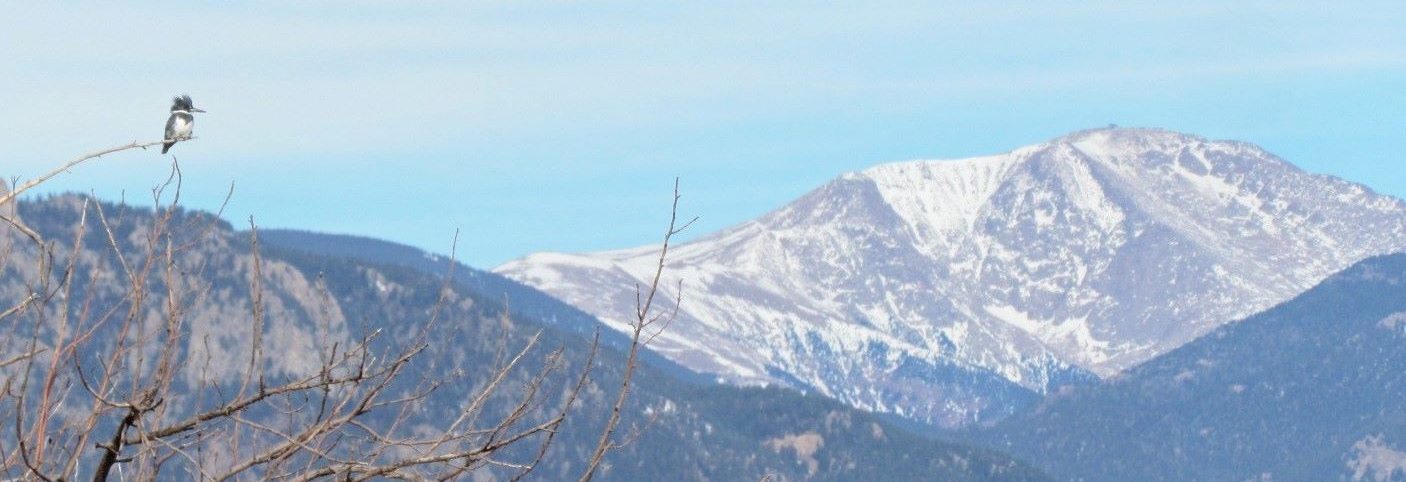

I always claim that my favorite bird is the one I’m watching at any given moment and while I stand by that statement, some birds undeniably have an added aura of attractiveness.
Such is the case with wading birds. Sleek and slender with varying degrees of long-leggedness, lovely color combinations, and accent plumes, they are grace and elegance personified (or rather, avified). Most stride or run through shallow water along the shores of lakes or ponds or banks of rivers, where they forage for aquatic insects, crustaceans, or fish (though their diet might also include small amphibians, reptiles, even mammals or other birds). Many have dagger-like bills that strike at lightning speed and impale the clueless victims. Others probe the mud or filter water for edible morsels.
The sheer number and variety of wading birds stood out during our Texas trip this spring. In the part of Colorado where we reside, I occasionally see small clusters of Snowy Egrets, a dozen or so Great Blue Herons in a rookery, or a handful of Great Egrets during migration, but the White Ibis, Little Blue Herons, Tricolored Herons, Reddish Egrets, and Roseate Spoonbills that populate the Texas Coast year-round and often gather in large groups were special, especially since I encountered the last three species for the first time in my life. The out-of-the-way, and splendidly plumaged American Flamingo in the featured photo above was an unexpected bonus.
I hope you will enjoy the portrait gallery of Texas wading birds.
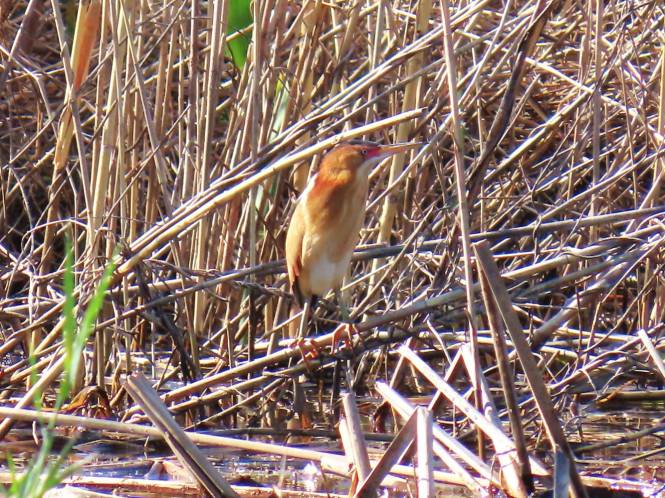
Least Bittern (Botaurus exilis)/Indianerdommel. I missed out on seeing American Bitterns.
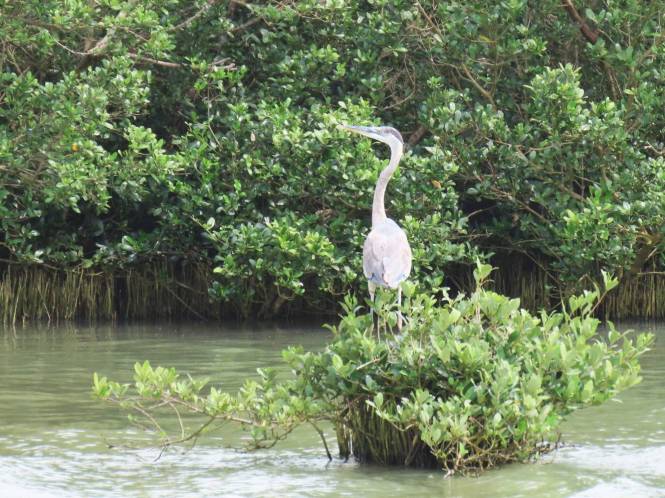
Great Blue Heron (Ardea herodias) on a mangrove/Kanadareiher auf einer Mangrove, weit weg von Kanada
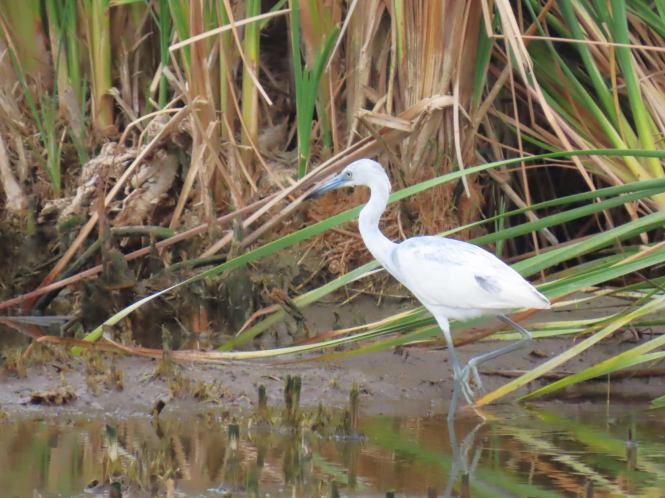
Little Blue Heron, juvenile (Egretta caerulea)/Blaureiher

Little Blue heron, adult (Egretta caerulea)/Blaureiher

Yellow-crowned Night Heron (Nyctanassa violacea)/Krabbenreiher. I also missed out on seeing Black-crowned Night Herons.

Great Egret (Ardea alba)/Silberreiher

Snowy Egret (Egretta thula) with “golden slippers”/Schmuckreiher mit “goldenen Pantoffeln”

Western Cattle-Egret (Egretta ibis)/Kuhreiher. Unlike the others, this bird prefers fields as opposed to streams and forages near the feet of cattle, feeding on grasshoppers and other animals.
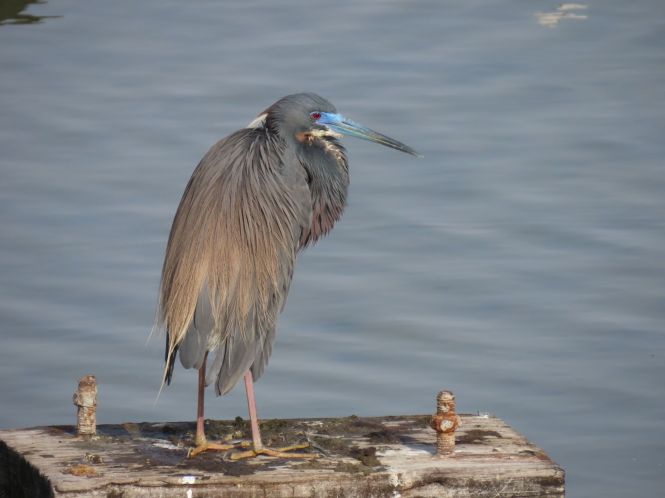
Tricolored Heron (Egretta tricolor)/Dreifarbenreiher
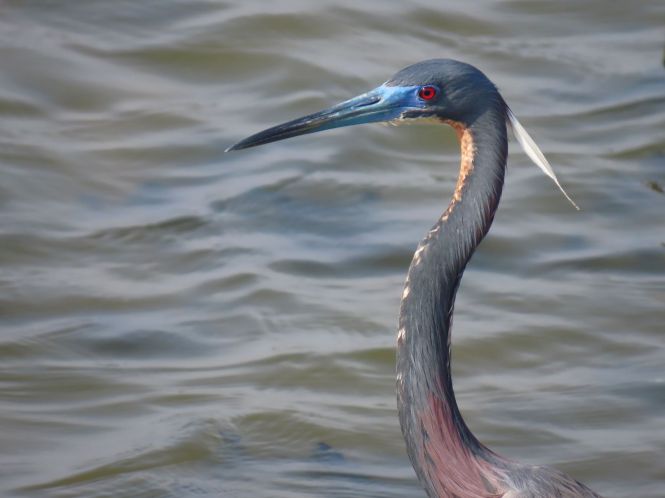
Tricolored Heron (Egretta tricolor)/Dreifarbenreiher
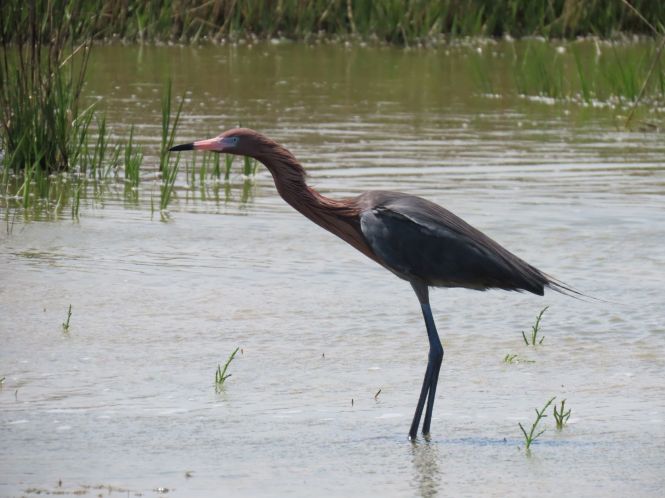
Reddish Egret, dark morph (Egretta rufescens)/Rötelreiher, dunkle Form
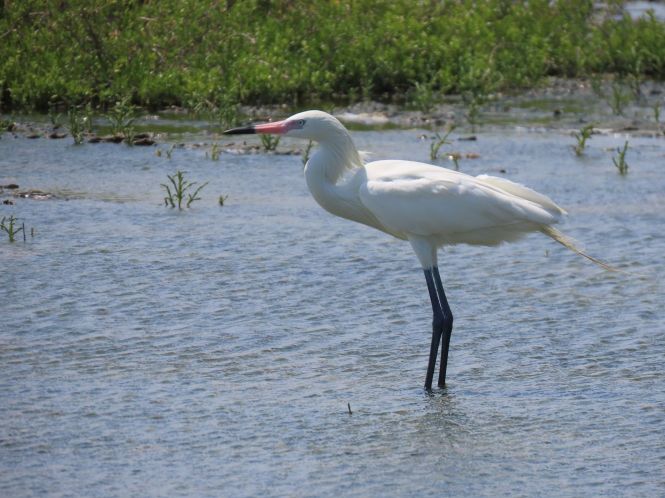
Reddish Egret, white morph(Egretta rufescens)/Rötelreiher, weiße Form
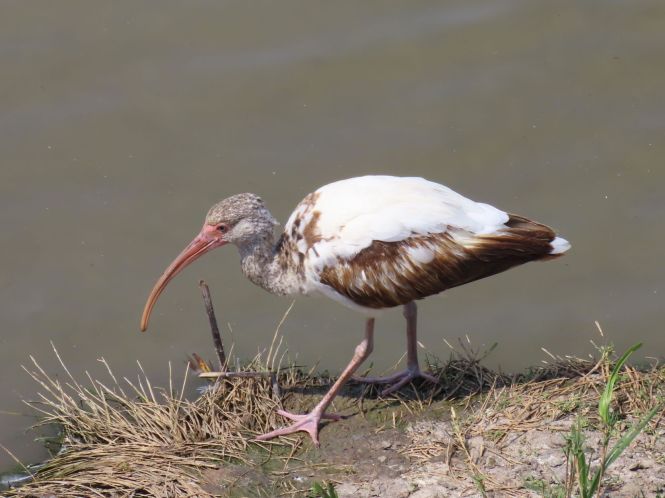
White Ibis, juvenile (Eudocimus albus)/Schneesichler

White Ibis, adult (Eudocimus albus)/Schneesichler

Roseate Spoonbill, 2nd year (Platalea ajaja)/Rosalöffler
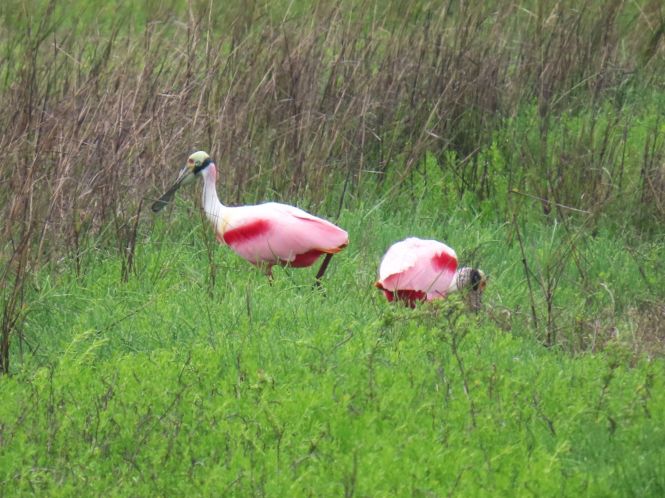
Roseate Spoonbill, adult (Platalea ajaja)/Rosalöffler

Green Heron (Butorides virescens) on a nest with beautiful bluish eggs/Grünreiher mit Nest. I hope those eggs have hatched and the juvenile Green Herons are eagerly exploring their new world.
If you are interested in my previous posts about our road trip, you can find them under the Texas tab in the menu.
 tanja britton
Ich genieße Deine Vogelbilder aus Texas sehr, wie Du weißt. Die Least Bittern habe ich nicht gesehen, alle anderen liefen mir auch vor die Kamera. So wunderschöne Erinnerungen. Und den Green Heron im Nest, wie schön das Bild ist. Texas hat noch sehr viel Natur zu bieten, besonders Vögel, wir haben aber auch ein Wildschwein gesehen, einen riesigen Eber im Naturschutzgebiet Aransas, wir waren damals erschrocken.;-)
Wir haben ein paar Tage Urlaub im Osten gemacht, dort ist die Natur noch mehr intakt als bei uns. Ich hatte auf der Merlin App viele Vögel, die es hier gar nicht mehr gibt. Gesehen habe ich sie allerdings nicht 😉
Liebe Grüße
Maren
LikeLiked by 1 person
Dankeschön, liebe Maren. Wie wunderbar, daß Du die meisten dieser langbeinigen Schönheiten zu sehen bekamst. Und einem Wildschwein begegnet zu sein, war auch etwas Besonderes. Wir haben nur die verwilderten Schweine im Aransas NWR gesehen, aber ganz weit weg.
Den Osten Deutschlands würde ich der Natur wegen auch gerne mal besuchen. Leider wird es wahrscheinlich nur eine Frage der Zeit sein, bis die Vögel auch dort verschwinden. Es ist zum Heulen . . . 😢
Merlin ist sehr hilfreich, um in einer neuen Gegend eine Übersicht über die lokale Vogelwelt zu gewinnen. Dann kann frau sich darauf konzentrieren, die gehörten Vögel auch zu sehen.
Ich wünsche Dir ein angenehmes Wochenende.
Herzlichst,
Tanja
LikeLiked by 1 person
Ich habe einen Freund besucht, der Wiederhopfe wieder angesiedelt hat und den Wendehals und jetzt sich um Ziegenmelker kümmert. Auf meiner Merlin App hatte ich die Beutelmeise – nie gesehen – dort gibt es sie noch, der Osten hat mehr Natur bewahrt undnicht alle wählen AFD.
LG
MAren
LikeLiked by 1 person
Der Einsatz Deines Freundes ist bewundernswert. Hoffen wir, daß die Natur im Osten bewahrt werden kann.
LikeLiked by 1 person
https://www.nabu-plau.de/biotope/marienflie%C3%9F/
Man kümmert sich wirklich sehr.
LG Maren
LikeLiked by 1 person
👍
LikeLike
Liebe Tanja.
Es gibt so viele interessante und hübsche Vögel auf der Welt.
Es ist bezaubernd.
Danke für die Vorstellung und wunderbaren Aufnahmen!
Leider darf ich wegen einer Schulterüberbelastung durch das Fotografieren unserer Vögel hier im Lande keine Vögel mehr “schnappen”
Aber gucken und hören geht ja weiterhin.
Ich wünsche dir viel Vergnügen weiterhin beim birding.
Liebe Grüße Brigitte
LikeLiked by 1 person
Liebe Brigitte,
Das hast Du gut zusammengefaßt. Unsere Lieblingswesen (neben Buddy, natürlich!) sind interessant, hübsch und bezaubern.
Es tut mir leid zu hören, daß Deine Schultern die schwere Kamera nicht mehr tragen kann. Wenn Dir das Gucken reicht, ist es gut. Wenn aber nicht, gibt es viele Kameras, die nicht viel wiegen und trotzdem gute Bilder machen.
Auch Dir weiterhin Freude und Beglückung beim “Birding”.
Dir und Buddy ein angenehmes Wochenende.
Herzlichst,
Tanja
LikeLiked by 1 person
Das ist nicht das Problem.
Die Schulter ist dermaßen entzündet, dass ich den Arm nicht heben kann. Und das seit Februar.
Ich hoffe auf den nächsten Termin Anfang August.
Liebe Grüße Brigitte
LikeLiked by 1 person
Ich wünsche Dir gute Besserung, liebe Brigitte! Und hoffentlich eine Therapie, die hilft.
LikeLiked by 1 person
Dankeschön 😘
LikeLiked by 1 person
Liebe Tanja, dein Bericht und die Fotos sind wirklich beeindruckend! Besonders die Bilder der Watvögel fangen die Eleganz und Anmut dieser faszinierenden Vögel perfekt ein. Die Vielfalt der Arten, die du während eurer Texasreise entdeckt hast, kommt auf deinen Fotos wunderbar zur Geltung. Wirklich super ist das Foto des amerikanischen Flamingos! Wie schön, dass du die Gelegenheit hattest, solch prächtige Gefieder in natura zu sehen. Danke, dass du diese besonderen Momente mit uns teilst!
LikeLiked by 1 person
Liebe Rosie,
herzlichen Dank für den netten Kommentar. All diese Vogelbegegnungen haben mich sehr beglückt und gleichzeitig die Traurigkeit darüber vertieft, daß so viele Arten nach und nach verschwinden und der Wille und Einsatz fehlen, das zu tun, was nötig wäre, um ihnen ein Weiterleben zu ermöglichen.
Sei herzlich gegrüßt,
Tanja
LikeLiked by 1 person
Ich stimme dir zu, liebe Tanja. Es ist wirklich wichtig, dass wir uns bewusst machen, wie wertvoll unsere Natur und ihre Bewohner sind, und dass jeder von uns einen kleinen Beitrag leisten kann, um sie zu schützen.
Sonnige Sommergrüße mit ein paar weißen Wolken…..von Rosie
LikeLiked by 1 person
Wie wahr!
LikeLiked by 1 person
Thank you so much for sharing the photos of these Texas wading birds! 🤗🤗🤗
I found them truly fascinating, and I also appreciated your beautiful introduction.
LikeLiked by 2 people
Thank you, Luisa. It makes me happy to know you enjoyed these beauties.
Best wishes,
Tanja
LikeLiked by 1 person
You’re more than welcome, dear Tanja 🙏🙏🙏
LikeLiked by 1 person
These are wonderful. 😊
LikeLiked by 1 person
Thank you, Pepper. It was wonderful to see them! 🦩
LikeLiked by 1 person
I agree, simply wonderful! I’ve run out of my limited English expressions☺️
LikeLiked by 1 person
Thank you, Takami. It was simply wonderful!
LikeLiked by 1 person
It’s easy to see you made the most of your birding visit to the coast.
I looked up the German word for ‘heron,’ Reiher, and found it developed from Old High German reigaro, which turns out to have been an alternate form of Old High German heigaro. You can trace that even farther back, and see how English heron is related, in Wiktionary.
LikeLiked by 1 person
Somehow in the transition from comment box to posted comment my first two lines got glommed into one with no space between the halves. Inscrutable are the ways of the Internet.
LikeLiked by 1 person
No problem, it happens to all of us. I corrected the “glomming.”
LikeLike
Thank you, Steve. Meeting manifold feathered friends was fabulous.
If the many ways of the internet are inscrutable, it’s edifying to know that the etymology of some words is scrutable.
LikeLike
Great photos. Awesome place.
LikeLiked by 1 person
Thank you, Michael. We enjoyed all the wonderful birds we were able to see.
LikeLiked by 1 person
You’re welcome, Tanja. It looks like you had a great time indeed.
LikeLiked by 1 person
Wowsah, what a fine collection of photos! They do a beautiful job of showing the glory of wading birds. The top picture is particularly stunning.
LikeLiked by 1 person
Thank you, Laurie. I’m so grateful to have met so many wonderful feathered friends during our trip.
LikeLike
I know a few of these birds because we have them in Italy too. The Roseate spoonbill is amazing!
LikeLiked by 1 person
Thank you.
It’s nice to know that you have seen some of these birds in Italy. The Roseate Spoonbills were wonderful, their color and long bills make them unforgettable.
LikeLiked by 1 person
Wonderful sightings and captures, Tanja. Seeing them in breeding plumage is an extra treat. 🤩 👏🏼
LikeLiked by 1 person
Thank you, Eliza. It was joyful to see these beauties. The vibrant colors of the lores and beaks on some of the birds truly were a special bonus.
LikeLiked by 1 person
Spectacular photos, Tanja! I am particularly fond of the ones of the blue herons; I can never get close enough to them to get portraits like these. 💙
LikeLiked by 1 person
Thank you, Julie, I’m glad you enjoyed these portraits.
I find that many herons are tolerant of humans if we approach slowly or sit down to watch. I hope you will find some who don’t mind having their pictures taken!
LikeLiked by 1 person
I hope so too! 💙
LikeLiked by 1 person
Great collection of photos. You saw a WHOLE lot of birds.
LikeLiked by 1 person
Thank you, Neil. We did. Which is why there will be more bird-themed posts. 😊
LikeLiked by 1 person
Nice collection of birds…(Suzanne)
LikeLiked by 1 person
Thank you, Suzanne. It was a joy to be able to see and photograph them.
LikeLike
Beautiful, Tanja. And what a collection of them you managed to photograph.
LikeLiked by 1 person
Thank you, Michael. I know there are birders who are happy to watch only, but I find it more satisfying to also capture a picture I can revisit later. It helps me to relive the moment.
LikeLiked by 1 person
Wonderful set of photos, Tanja. Indeed a gaggle of skinny-legged, sharp-beaked, colorful birds! So glad you were able to see such a variety.
LikeLiked by 1 person
Thank you, Tina. Your words summarize it well. These birds are so darn attractive.
LikeLike
Wow, I had no idea there are so many types of heron. What a colorful collection!
LikeLiked by 1 person
Thank you, Diana. Seeing so many different types of herons and egrets was one of the highlights of our trip.
LikeLiked by 1 person
What a superb set of photos, a great reminder of the variety and beauty of the heron and its cousin. Good to see the Roseate Spoonbill, Barbie’s favourite bird 🙂
LikeLiked by 1 person
Thank you. Many of these birds did not mind posing, which was a boon for all of us photographers.
I can see why the Roseate Spoonbill would be a favourite–it’s hard to argue with anybody who doesn’t mind wearing bright and unabashed pink.
LikeLiked by 1 person
Tanja, you were able to check off a myriad of wading birds on this trip. I bet you are still processing and sorting all of the photos you didn’t publish.
LikeLiked by 1 person
Thank you, Brad. It was very gratifying to see such a wonderful variety of wading birds.
I have thought about wrapping up my posts about Texas birds in order to focus on what’s been happening in the here and now, but I think I need to do at least 2 or 3 more about our trip. I have plenty of photos to do more, but I feel the need to be done soon.
LikeLiked by 1 person
Tanja, I think the photos are done when they are done, and not before; we all want to see the stories attached. As Brian tells me, it’s not only the photos but the story that goes with them. I’ve found more than a dozen stories from a single location, so too should you if the photos suggest it. Plus, they don’t all have to be done now. Use them as a reward, or a break, from the everyday here and now stuff. Hey, maybe that’s why Brian claims he has such a backlog of photos… 🙂
LikeLiked by 1 person
That’s a good point, Brad, thank you. I should reconsider my attitude.
LikeLiked by 1 person
Hi, Mrs. Tanja-
I thoroughly enjoyed your amazing photos!! Thank you for sharing them. I especially loved the Roseate Spoonbill since I think that their beaks are just so fascinating. Once more, it looks like your trip to Texas was a success for sure. 🙂
Blessings,
~Gavin
LikeLiked by 1 person
Thank you, Gavin. It makes me happy to know you enjoyed these photos.
Isn’t it fun when a bird’s name reflects one of its main characteristics? The spoonbill definitely fits that bill (pun intended). I also love that dazzling pink plumage.
More photos of birds to come . . . 😊
Enjoy your weekend,
Tanja
LikeLiked by 1 person
I think that this is a fun trait as well!!
I am very much so looking forward to the rest of your photos!
I hope you have a blessed weekend as well!
Gavin
LikeLiked by 1 person
🙏
LikeLiked by 1 person
What a fun post! I’m so glad you were able to see so many of the birds that inhabit my world on a daily basis. I was especially interested in the photo of the least bittern. I’ve seen American bitterns a few times at the Brazoria refuge, but I’ve yet to come across the least bittern. Another I’ve yet to see is the white morph of the reddish egret. I’m not sure I even knew that one had a white morph.
Just for fun, on Friday I made a list of the herons and egrets that were sharing the large boatshed where I was working. In the course of the day, these showed up: great blue heron, great egret, black-crowned night heron, green heron, snowy egret, and a little blue heron. The bitterns, spoonbills, yellow-crowned night herons, tri-colored herons, and cattle egrets never show up around the marinas: no doubt because of lack of cover and too-deep water.
One of my favorite series of bird photos involves a black-crowned night heron that began roosting in a tree by my home parking area. Being able to shoot upward offered an unusual and unbelievably cute perspective on the bird.
It’s been wonderful to follow along as you discovered all these Texas treasures!
LikeLiked by 1 person
Thank you, Linda. All these long-legged beauties count among my favorite memories of our trip.
How lucky you are to see so many of them on a regular basis, eg. when working on boats.
We saw 2 or 3 Little Bittern at Estero Llano Grande SP; it was actually the first time that I was able to get close looks at them, prior to that day, I had only heard them in the cattails.
I’m pleased to know that I remember your post about the night heron. I just double-checked–I liked and commented on that post from January 2020 (where, oh where, does time go?!).
LikeLiked by 1 person
What a wonderful collection of birds, all beautifully photographed! We get a few grey herons and little egrets on the river here. (They make a change from the more usual swans and ducks, which we have lots of!)
LikeLike
Thank you, Ann. I have seen Grey Herons and Great Egrets in Germany, but never a Little Egret, though I would love to. I find all of these long-legged creatures extremely elegant.
LikeLiked by 1 person
They are lovely to watch. There’s a large area of waterways north of us where we occasionally take a day-boat out and can watch the birds on the water…lots of herons there. 🙂
LikeLiked by 1 person
That sounds like a lovely place.
LikeLiked by 1 person
It is – it’s the Norfolk Broads, which is a system of rivers and ancient flooded peat-diggings that are like small lakes.
LikeLiked by 1 person
👍
LikeLiked by 1 person
Great post! I love those spoonbills. I see them on occasion when out walking.
LikeLiked by 1 person
Thank you, Robin.
How nice that you live in a place where spoonbills also live. I’m envious. 🙂
LikeLike
Great photos of birds
LikeLiked by 1 person
Thank you, I’m glad you think so. 😊
LikeLiked by 1 person
That is fine representation of the Texas shorebird variety Tanja. Of course, the first shot is the prize in my opinion and 2nd, well it has to be the least bittern. If you only get to see one bittern, the least is the one you want as it is far more secluded and harder to find than the American (Leona was always the go to place for the American, but in recent years, it has been absent and replaced by the Least). The funny thing is, based on the settings of these shots I can probably identify where you took the shots ha. Nice job!
LikeLiked by 1 person
Thank you, Brian. I loved being able to see so many of these egrets and herons on a nearly daily basis; they are usually few and far between hereabouts (apart from Great Blue Herons).
How nice that you can predict where the photos were taken based on the birds shown. I benefited greatly from your experience! Thank you! 🙏
LikeLiked by 1 person
Very welcome and just an email away if you need any recommendations on our other frequented spots like Arizona, Alabama, Vegas, Panhandle or god help you Illinois ha!
LikeLiked by 1 person
Be careful about what you are offering! I might take you up on it! 😸
LikeLiked by 1 person
Nice group of photos!
LikeLiked by 1 person
Thank you, I’m glad you think so.
LikeLiked by 1 person