
Growing up in Germany, I never thought about the dark, damp, and dismal weather that characterizes—oh, roughly 6-plus months out of each year. But that’s no longer true and if I had no family obligations, I would not spend late autumn or winter in central Europe. When we visited in November 2023, we hardly saw the sun at all and it was rainy or foggy on more days than not.
During our most recent sojourn in December and part of January, it didn’t rain quite as much, yet sunny days were still far and few between. We even experienced snow on two occasions. Although I prefer snow to rain on almost any winter day, the white crystals transformed to slush all too fast and only contributed to turning terra firma into a slippery, slushy surface that clung to our shoes and doubled or tripled their weight.
What ruined German winters for me has undoubtedly been my residence in Colorado. While it turns out that the claim of 300-plus days of sunshine is an exaggeration created by 19th century tourism boosters, more recent data collected by the National Weather Service have helped correct those numbers. Days that are “clear” and “partly cloudy” are considered sunny and using these definitions, the state capital Denver has 115 clear days, 130 partly cloudy days, and 120 cloudy days during an average year, which adds up to 245 sunny days. Alamosa in the San Luis Valley is the state leader with 285 sunny days, followed by Pueblo (258 days), and our home town, Colorado Springs (247 days). Not 300, but that’s still not bad. And definitely better than the 146 average days reported by the German Meteorological Service. A difference of 100-plus days, or more than 3 months!
One could certainly accuse me of being spoiled but I know I’m not alone feeling this way; even forever residents of Germany admit to feeling depressed by the prolonged dank and dreary conditions and the lack of sunshine. It’s no coincidence that Germans love to escape to sunny climes in droves during the winter. One wonders if the dearth of sunlight can be blamed for what a 2011 article by The Telegraph summarized as “Germany officially the least funny country.” That might be a topic for another time.
Why am I going on about this? Because it’s a fact of life that our mood is affected by the weather and climate. It’s also a fact that people partake of antidotes. In Germany, the most conspicuous during the winter are Christmas markets, Glühwein (A LOT of Glühwein), and the aforementioned travel to islands in the Mediterranean or Atlantic.
My favorite remedy for the winter blues (or for any kind of blues, as a matter of fact) is to watch birds.
Whenever the sun deigned to make an appearance, I tried to get outside to bird. And during all those other times, I tried to watch bird feeders as much as possible. As it happens, my father’s neighbors are enlightened and caring gardeners who allow their garden to remain “wild” in the winter, leaving withered plants in place to provide food and shelter for a range of animals and even building special refuges for hedgehogs and amphibians. They also supplement their fallow garden’s offerings with seed and suet for the birds. While we were there, they even placed additional feeders in spaces that could be observed through my father’s kitchen window so I could feast my eyes on my favorite feathered friends while stirring the pots or washing the dishes. Thank you, Trudy and Josef, for your neighborly gifts on so many different levels and for so many different creatures. 🙏
What follows are portraits of a few avians who gladdened my heart during our recent visit (the images of the Great and Blue Tit are from my archives).

European Robin/Rotkehlchen (Erithacus rubecula)
European Robins only share a name and some orange color with American Robins. Unlike the latter, they aren’t thrushes, belonging to the family of Old World Flycatchers instead. But for those Europeans who first encountered robins in America, there must have been enough resemblance to remind them of the robins back in Europe.
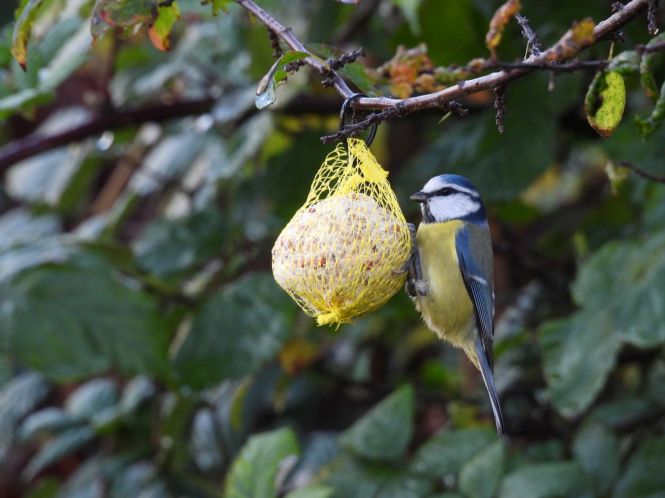
Eurasian Blue Tit/Blaumeise (Cyanistes caeruleus)

Great Tit/Kohlmeise (Parus major)

Common Chaffinch, male/Buchfink, männlich (Fringilla coelebs)
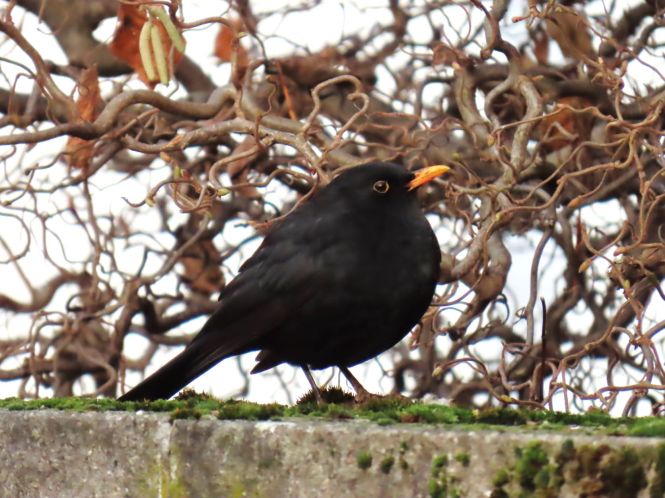
Eurasian Blackbird, male/Amsel, männlich (Turdus merula)

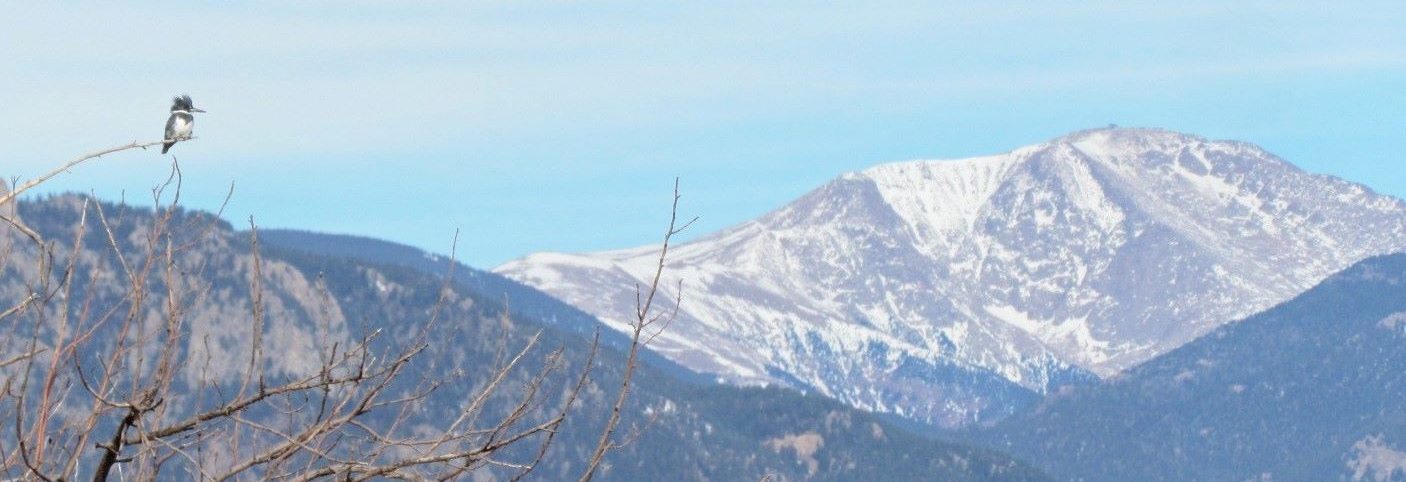
Common Kingfisher/Eisvogel (Alcedo atthis)
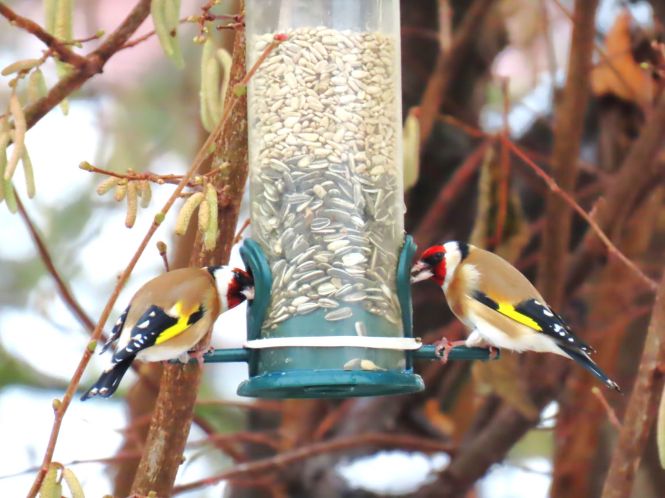
European Goldfinch/Stieglitz, aka Distelfink (Carduelis carduelis) at a feeder in the neighbors’ yard

Eurasian Wren/Zaunkönig (Troglodytes troglodytes)
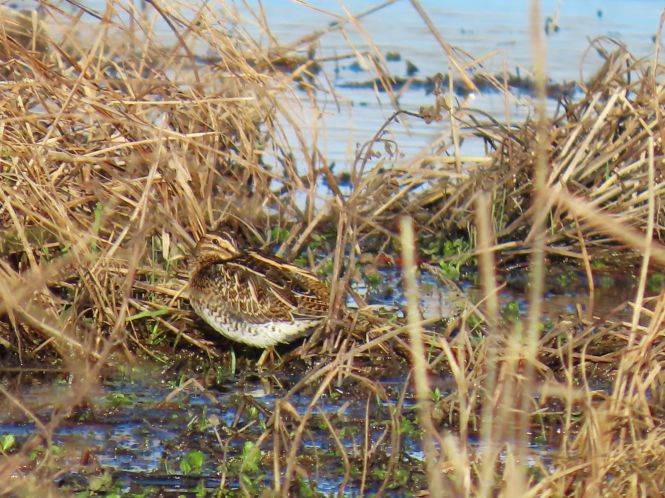
Common Snipe/Bekassine (Gallinago gallinago)

White Wagtail/Bachstelze (Motacilla alba)
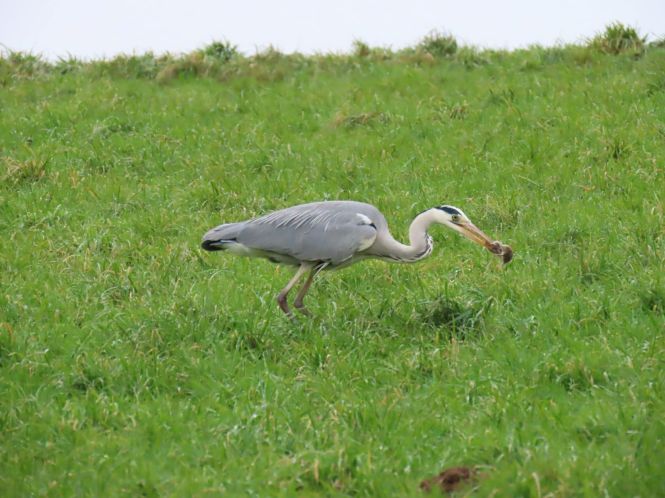
Gray Heron (AE) or Grey Heron (BE)/Graureiher (Ardea cinerea)

Mute Swan/Höckerschwan (Cygnus olor), with Graylag Geese/Graugänse (Anser anser) in the background
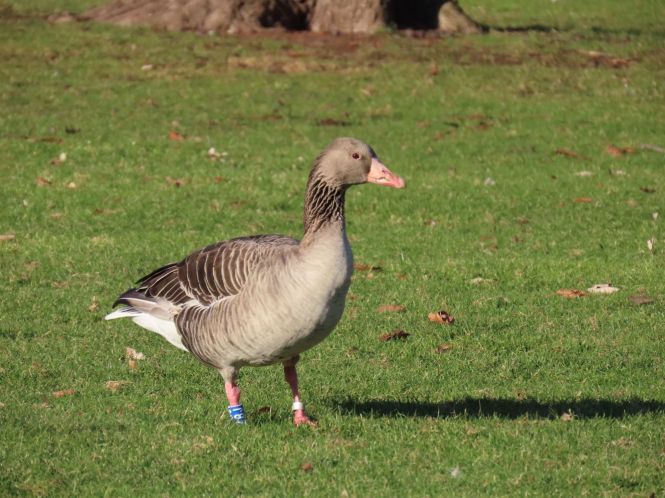
Graylag Goose(AE) or Greylag Goose (BE)/Graugans (Anser anser)

Eurasian Jay/Eicheläher (Garrulus glandarius)

Black-headed Gull in nonbreeding plumage/Lachmöwe im Schlichtkleid (Chroicocephalus ridibundus)
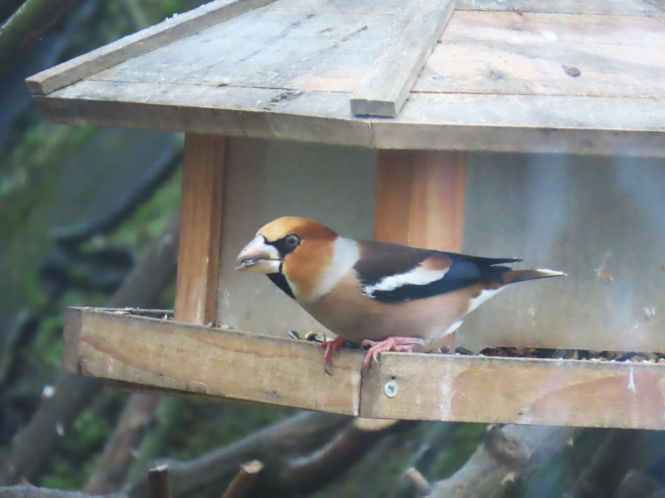
Hawfinch/Kernbeißer (Coccothraustes coccothraustes). Thank you, dear Elke and Arnim, for also feeding the birds (and for feeding us 😊).

Once again, a European Robin/Rotkehlchen (Erithacus rubecula), one of the most endearing birds ever.
Dear fellow blogger,
in case you, too, are affected by the winter blues,
I hope you have your own
heartwarming remedy.
 tanja britton
Over here, the trendy name for low mood in winter is Seasonally Affective Disorder (aka SAD). I don’t know if the terminology has made it over to the US, or if it’s just a British thing reflecting our twin obsessions of weather and acronyms? I agree that birds are a good remedy, and looking at your photos it’s interesting to see how similar the birds of Germany are to the birds of Britain. We have a Pied Wagtail rather than a White Wagtail, but in appearance the two species are quite similar. Other than that, all the species you cover are seen here, although in my experience the Hawfinch is very uncommon.
I hope you’re seeing lots of birds this winter, and that the blues are confined Spotify and similar music channels!
LikeLiked by 2 people
I, an American, was going to mention the apt acronym SAD. So yes, we use it over here, too. Whether we adopt a positive summer counterpart in GLAD (gloriously liberating affective delight) remains to be seen.
LikeLiked by 2 people
Nice one, Steve. 😂. We could do with some GLAD here right now, it’s wet and miserable today!
LikeLiked by 1 person
GLAD is definitely better than SAD.
LikeLiked by 1 person
As you already know from Steve’s response, SAD is a well-known entity here as well. For my taste, it has too much of a clinical ring to it and, as a matter of fact, it is an official psychiatric diagnosis, which might be too extreme a description for what some people experience. But for others, it is very real and very debilitating, sadly.
Thank you also for your observation about the similarity of the birds in the UK and Germany. I think the Hawfinch is not particularly widespread in Germany and it’s my impression that it’s mostly seen in the winter, at least where my father lives. It’s a striking bird and I was happy to get glances at a few.
I hope you, too, can keep the blues confined to your musical sessions.
LikeLiked by 1 person
My admittedly very limited experience in Europe suggests that Germans take advantage of warmer climes in summer as well as winter. During several weeks on the Mediterranean island of Mallorca in 1985, I saw many German tourists; some of the signs on stores were even in German. And speaking of German, not till reading the caption for your goldfinch photograph did I realize what the last name of famous photographer and purveyor of art Alfred Stieglitz means.
Imagine if people, like birds, had different breeding and non-breeding appearances.
LikeLiked by 1 person
I knew the bird Stieglitz long before I knew about Alfred Stieglitz, and I have to say I prefer the former. I think the latter was responsible for bringing much sadness to Georgia O’Keeffe (and probably many other women besides).
Thank you also for sharing your experiences of Germans abroad. Not having explored the typical travel destinations myself, I’m not really in the loop.
Some might say that people’s appearances change during breeding . . .
LikeLike
Anser anser practically begs someone to ask: What was the Question question?
LikeLiked by 1 person
Wir haben hier neu das Wort “Dunkelflaute” – immer wenn es so dunkel und windstill ist, dass keine erneuerbaren Energien fließen. In diesem Winter schien extrem wenig die Sonne bisher und ich würde auch wieder liebend gern in Texas sein wie im Winter vor 2 Jahren, oder gar in Florida. Genieße Deine Winter in Colorado. Wir warten hier auf den Frühling. Das Leben im Sommer ist hier so ganz anders als im Winter.
Liebe Grüße
Maren
LikeLiked by 1 person
Das Wort Dunkelflaute habe ich bei Dir auf dem Blog zum ersten Mal gelesen, liebe Maren. Ich kann mir vorstellen, wie schwer es sein muß, das jedes Jahr durchzustehen, es schlägt wirklich aufs Gemüt.
Ich bin froh, wieder in Colorado zu sein, und auch wenn es zeitweise fast zu kalt ist, draußen etwas zu unternehmen, ist es doch schön, die Sonne im blauen Himmel oder im Funkeln der Schneefelder zu sehen.
Ich wünsche Dir genug sonnige Intervalle, um Deine Tage zu erhellen.
Alles Liebe,
Tanja
LikeLiked by 1 person
Ja, das Wort Dunkelflaute hat mich zum Schmunzeln gebracht. Ich denke oft an unsere Aufenthalte in den USA, auch im wunderschönen Colorado, zweimal sind wir nach /von Denver geflogen.
LG
MAren
LikeLiked by 1 person
Moin Tanja.
Ach, ich sehe das ganz anders. Ich bin froh in Norddeutschland leben zu dürfen.
Regen und Wind gehören zum Winter.
Und SCHNEE juche.
Leider ist der rar geworden. Wir wissen ja warum.
Ewige Sonne und vor allem Hitze machen mir zu schaffen.
Ich denke noch mit Grausen an die hohe Luftfeuchtigkeit in Florida und den Karibik Inseln.
Bei dir in Texas wird es anders sein, aber vielleicht dann zu trocken für meinen Geschmack 🤔😅
Ich bin sehr froh, dass jeder Mensch sein persönliches Wohlfühlwetter hat und hoffe, dass er auch dort leben darf, wo es überwiegt.
Die glücklichsten Menschen in Europa sollen die Skandinavier sein.
Und das bei langer Dunkelheit, Kälte und Regen/Schnee.
So what 🤭
Vögel beobachten ist ja auch mein Vergnügen und deine “Schnapps” gefallen mir sehr 😊
Obwohl wir noch im Januar sind sah ich gestern ein Hausrotschwanz Pärchen in ihrem gewohnten Revier.
Schon zurück und schon balzend 😍
Hab einen guten Tag liebe Tanja.
Viele liebe Grüße Brigitte
LikeLiked by 1 person
Vielen Dank für Deinen Kommentar, liebe Brigitte.
Es freut mich für Dich, daß Du mit jedem Wetter zurechtkommst, ohne daß es Dir aufs Gemüt schlägt. Ich denke, daß Du die Ausnahme bist. Aber ich glaube, daß es am Meer etwas einfacher ist als im Binnenland, es hat nämlich bei jedem Wetter besondere Reize.
Regen oder Nebel ab und zu machen mir auch nichts aus, aber wenn das tage- oder sogar wochenlang so geht, nur mit kurzen sonnigen Pausen, macht mir das echte Probleme. Wie Du mag ich Schnee auch liebend gern, besonders wenn die Sonne auf ihn scheint. Das bekommen wir hier in Colorado oft zu erleben und es ist wunderbar.
In einer idealen Welt könnten wir uns vielleicht alle unser Wohlfühlwetter aussuchen, doch die meisten Menschen haben wahrscheinlich keine Wahl über ihren Wohnsitz.
Deine Rotschwänzchen werden wohl von den klimatischen Veränderungen etwas irregeleitet, doch ich hoffe, daß sie trotzdem erfolgreich brüten können, vielleicht auch mehrere Male.
Genieße auch weiterhin Deine Heimat in Norddeutschland und sei herzlich gegrüßt,
Tanja
LikeLiked by 1 person
Glad that you were able to counter the winter blues (to some extent) by watching the native birds. Nature’s goings-on are excellent feel-good remedies for crummy weather (and many other things crummy!). Your photos are lovely; I’m always surprised at the European ‘robin’–so different from ours, but of course it is! And your correct, it is a most endearing bird! Welcome home to sunny Colorado!
LikeLiked by 1 person
Thank you, Tina. I don’t know where I would be without being able to watch and enjoy birds.
Some birds seem to speak to our souls more directly than others, and the European Robins are definitely among that group.
It’s been nice to return to some beautiful winter weather with snow, no wind, sunshine, and blue skies.
I hope you are enjoying your winter.
Best,
Tanja
LikeLike
Beautiful series of captures, Tanja! Those European Robins are definitely endearing, and quite a difference from our American Robin.
LikeLiked by 1 person
Thank you, Donna. I enjoy getting to know the birds in Germany better each time I visit. Sadly, while I still lived there, I was not yet interested in them.
As you know, European Robins only share a name (and some orange color) with American Robins. They aren’t thrushes, but belong to the family of Old World Flycatchers instead, but I guess for those Europeans who first encountered robins in America, there was enough resemblance to remind them of the robins back in Europe.
LikeLiked by 1 person
Lovely birds.
‘Matter of fact, I left France for Mexico many years ago to escape the darkness of winters.
Now I have the Crook ruling north of the border… “Winter is coming.”
LikeLiked by 1 person
Thank you, Brian, I’m glad you like the bird photos.
I can relate to your decision to move to sunnier climes. There was no way of knowing then what would happen north of the border now. That’s definitely winter in its worst form.
LikeLiked by 1 person
Where is Pete Seeger? Help!
LikeLiked by 1 person
It can be difficult to maintain a happy mood when the weather is constantly overcast or raining.
Our first assignment to Germany when we were in the Air Force was to northeastern Bavaria. I received the best advice from our landlord. “Get good raincoats. Don’t wait for good weather to go exploring.”
The second best advice he provided was the suggestion to go “Volksmarching“. We tried it one weekend and immediately became addicted. Wandering the magnificent forests was like a tonic for our souls, no matter what the weather was doing.
Then we found a dozen great birding locations and pretty soon we almost forgot about sunshine. Almost!
Of course, living there for only three years (three different times) is not like being a permanent resident. But the support we received from so many German friends helped keep our spirits up when we needed it most.
LikeLiked by 1 person
Thank you for sharing some of your experiences of living in Germany, Wally. I’m glad you have fond memories of your years there and were able to get out and enjoy nature the way you did, despite less-than-ideal conditions.
While I also try to stay active outdoors regardless of the weather, there is only so much water raincoats and durable shoes can shed before everything underneath goes soggy. And it’s no fun trying to look through wet binoculars or to take photos when the camera lens is covered in droplets.
Having good friends who help keep our spirits up is one of life’s greatest gifts.
Warm wishes,
Tanja
LikeLike
The European Goldfinch is very pretty. I don’t think I’ve ever seen one before. Where I live now in Calgary and where I grew up in Winnipeg, we also enjoyed well over 300 sunny days a year. I can’t imagine living in a place where there is so much rain and fog. Maggie
LikeLiked by 1 person
Thank you, Maggie, I agree–the European Goldfinch with its various colors is spectacular.
I think once we get used to living in a sunny climate, it’s hard to adapt to places where we can’t see the sun and sky for long periods of time.
Wishing you many sunny days ahead,
Tanja
LikeLiked by 1 person
European Goldfinch is called “Stieglitz” in German, which translates to “thistle-finch,” referring to the bird’s fondness for eating thistle seeds. I believe that birdwatching in the winter is a brilliant idea. I did the same when I went to college in North Carolina, which has mild winters compared to others, but enough to provoke SAD, and I was able to improve my symptoms. I love all your images, and the Eurasian birds are particularly colorful.
LikeLiked by 1 person
Thank you, Maria, I’m glad you liked the photos.
As you might have noticed in my caption, another name for Stieglitz in German is Distelfink, which translates literally to thistle-finch. And while I have watched them feed on thistle, they also love sunflower seeds, which is obvious in my photo.
I’m glad you were able to improve your winter blues in N. C. with the help of birds. I watch them every day, not only in winter, and they bring me more joy than anything else in life.
LikeLiked by 1 person
Just did the garden bird count and watching one patch for an hour solidly is peaceful and instructive!
LikeLiked by 1 person
Taking that time each day to watch our feathered friends makes a huge difference in our lives, doesn’t it?!
LikeLike
Dein Beitrag hat zunächst meine Januar-Melancholie verstärkt, denn es ist ja alles wahr, was Du über den Winter in Deutschland anmerkst. Deine Maxime: “Geh’ und schau nach Vögeln” hat mein Gemüt gestärkt. Dennoch war ich ein wenig neidisch als ich die Fotos gesehen habe, denn an meiner Futterstation beobachte ich nicht diese Vielfalt. Eisvogel und Kernbeißer sind am Stadtrand von Berlin nicht zu finden. Andererseits: Neid kann doch positiv gewendet werden. Schöne Fotos kann man auch von Haussperlingen machen. Es muss nicht immer eine Rarität sein. Danke für die Maxime!
LikeLiked by 1 person
Lieber Karsten,
ich danke Dir für Deinen Kommentar. Es tut mir leid, daß ich dazu beigetragen habe, Deine Januar-Melancholie zu verstärken, doch ich hoffe sehr, daß die Gemütsstärkung durch die Vogelschau die Überhand gewinnen wird.
Ich stimme Dir vollkommen zu, daß es keine Raritäten sein müssen, die man fotografiert. Es kommt darauf an, präsent zu sein und die Vögel auf sich einwirken zu lassen, die sich halt gerade in unserem Umfeld befinden. Alle können uns etwas lehren und unsere Herzen erfreuen.
In diesem Sinne wünsche ich Dir “happy birding”.
LikeLike
Beautiful birds!
LikeLiked by 1 person
Thank you, Pam. I’m happy to share their beauty.
LikeLike
Lovely birds to keep one smiling during the dull and long German winter. I love watching birds all year round, but they become lifesavers in winter. I also need the sun to lift my mood. A week of cloudy weather can bring me down, down, down!
LikeLiked by 1 person
Thank you, Eliza. Like you, I watch birds year-round, every day, can’t imagine not paying attention to them now. And can’t imagine a world without them, they bring so much joy.
A little sunshine goes a long way in lifting our moods.
In that spirit, I wish you a sunny and bird-filled year ahead.
Tanja
LikeLike
Thank you!
LikeLiked by 1 person
For me a cheerful daily event is to watch our feathery friends visit our bird feeder. The worse the wintery weather is, the more many different species will drop by for a quick snack.
LikeLiked by 1 person
Thank you, Peter. The same is true for me. I’m so thankful for the birds who visit our feeders. The worse the weather, the higher their numbers and the more varied their species.
LikeLiked by 1 person
I love your words Tanja and it’s true we are better under the sun….Your pictures are amazing….My preferred bird ehhhh my favorite bird is the blackbird so round and lovely…. Vive les oiseaux!!!
IsabelleXXX
LikeLiked by 1 person
Thank you, Isabelle. I’m glad you enjoyed the pictures. Et oui: Vive les oiseaux!!!
I’m so glad you have a preferred, or shall we say favorite, bird. 😊 The Blackbird is related to the American Robin and their vocalizations are amazingly similar to one another.
Merci beaucoup,
Tanja
LikeLike
Hi, Mrs. Tanja-
I loved your article!!
It is so true that the weather affects one’s mood. I love the sunny days and feel that cloudy, rainy days have a negative effect.
My favorite bird you showed was the Eurasian Blue Tit.
Thank you so much!!
Gavin
LikeLiked by 1 person
Thank you, Gavin.
Whenever I’m away from Colorado, I realize how much I miss it and its many sunny days. But being able to observe and spend time with birds, always brings much happiness. The Blue Tit is also among my favorites, with its cheerful colors and its no less cheerful and trusting behavior.
Happy birding, wherever we are,
Tanja
LikeLiked by 1 person
What an amazing series of bird images.
I saw a European Goldfinch twice on a fence post near my balcony in 2017 but never since.
What a wonderful neighbour. I’ve come to the conclusion that people who take care of birds and give them water and/or food (especially in winter) are some of the kindest people on the planet and certainly to have as neighbours.
LikeLiked by 1 person
Thank you, Vicki. Being able to take photos of birds is one of my favorite pastimes.
I know you enjoy it, too, and I hope you will be able to photograph more of your balcony visitors.
What you say about kind people who care about birds and other creatures is definitely true for my dad’s neighbours!
LikeLike
I can appreciate negative feelings about gloom, especially when it seems interminable. But there are two sides to every coin: even the weather coin. When I moved to the San Francisco Bay area, it took me a while to understand that I was becoming restless and a little frustrated by day after day after day of clear blue skies, full sunlight, and never a drop of rain. Eventually, I figured out that I missed weather changes. When foggy days and nights finally began to show up in summer, I was thrilled!
I wonder if long periods of any sort of weather don’t get under peoples’ skin, so to speak. Northern friends begin to get cabin fever when winter refuses to break, but here on the Texas coast, the refusal of summer to leave, even in September, can make people cranky and miserable. Drought does it, too — and day after day of drizzle and rain. I don’t know if anyone ever has studied the phenomenon, but I’d bet anything people leaving the north for sunny climes in winter is akin to over-heated Texans heading to your Colorado mountains in August. They’re just eager for change!
LikeLiked by 1 person
Thank you for sharing your perspective, Linda. I think many people would agree with it, including me. I could not (happily) live anywhere without proper seasons, and without weather changes within each season. Luckily, despite the many sunny days here in Colorado, they aren’t monotonously the same.
Summer is probably the most taxing season because of longer and hotter stretches than ever before. We can try to escape into the mountains where, compared to the foothills, the temperature doesn’t typically exceed the 80s, rather than the 90s.
I realize that complaining about the weather is somewhat petty, considering how many people’s existence has been threatened or even destroyed by effects from climate change.
LikeLike
When it comes to climate change(s), it’s always worth considering the longer view. After all, there was a time when your state and mine were covered by the Western Interior Seaway!
Beyond that, there’s a difference between complaining about the weather and paying attention to the weather. Weather talk’s a social bond in a lot of places. I love conversations like this sort, common in front of feed stores or on docks: “Sure is hot.” “Yup.” “Think it’ll break soon?” “Hope so.” Those conversations can be adapted for cold, drought, hurricane, or flood, of course!
LikeLiked by 1 person
Remembering the Western Interior Seaway is indeed taking the long view. But I don’t think knowing that the climate was different millions of years ago provides any consolation to those people who lose their homes to rising sea levels, hurricanes, or fiery infernos in the present.
LikeLike
Liebe Tanja, ich kann dir nur zustimmen, dass das Wetter so manches Mal einen großen Einfluss auf unsere Laune hat. Aber ich muss dir gestehen: Ich lasse mich von grauem und regnerischem Wetter nicht trübsinnig machen! Stattdessen genieße ich die Gemütlichkeit, die solche Tage mit sich bringen. Ich treffe mich dann gerne mit Freundinnen in einem behaglichen Café, wo wir uns mit Tee, Kandis und Bienenstich verwöhnen und stundenlang quatschen – das ist wie ein kleiner Urlaub für die Seele! Und wenn ich mal zu Hause bin, liebe ich es, einfach herumzutrödeln, mit meiner Lieblings-Musik im Hintergrund, einem guten Buch in der Hand und vielleicht sogar einem Stückchen Apfelkuchen, den ich mir selbst gebacken habe. Wenn dann noch ein prasselnder Kamin da wäre…das wäre traumhaft!
Und deine Idee, an grauen und trüben Tagen unsere niedlichen, gefiederten Freunde zu beobachten, ist einfach wunderbar! Wer braucht dann schon einen Urlaub auf den teilweise doch sehr von Touristen überfüllten Kanaren, wenn man in unseren stillen Wäldern Uhus, Eichhörnchen und Spechte bewundern kann?
Liebe Tanja, ich hoffe, du findest immer einen Weg, die „Blues“ zu vertreiben, sei es mit Glühwein, Vögeln oder vielleicht sogar mit einem kleinen Tanz im Wohnzimmer!
Alles Liebe von Rosie
LikeLiked by 1 person
Vielen Dank für Deinen Kommentar, liebe Rosie.
Mir gefällt Deine Perspektive sehr gut und Zeit drinnen mit Freunden oder guten Büchern, Kunstprojekten oder Musik zu verbringen ist eine exzellent Therapie gegen Winter- oder jegliche Wetterdepressionen. Und eigentlich mag ich die trüben Tage auch deshalb, weil frau endlich dazu kommt, sich um einige liegengebliebene Dinge zu kümmern.
Doch wenn ich mal einige Tage hintereinander nicht raus an die frische Luft kann bekomme ich Hüttenkoller. Die richtige Balance zu finden, ist mir anscheinend noch nicht gelungen.
Die Vorstellung, Dich durchs Wohnzimmer tanzen zu sehen macht mich glücklich. 😊
Liebe Grüße,
Tanja
LikeLike
Die richtige Balance ist natürlich immer eine Herausforderung, liebe Tanja. Manchmal ist das Wetter auch einfach viel zu ungemütlich, um Zeit draußen zu verbringen. Umso schöner ist es, wenn es dann wieder ein paar Wolkenlücken gibt, ein paar zaghafte Sonnenstrahlen oder statt heulendem Sturm nur sanftes Schneegestöber – denn dann kann man auch wieder ein oder zwei Stündchen raus.
Liebe Grüße für dich…..von Rosie
LikeLiked by 1 person
Du hast recht, liebe Rosie.
Alles Gute Dir,
Tanja
LikeLike
This is a post that I think many people will relate to. I feel lucky as you do, to live in a spot that gets quite a few sunny days, even in winter. I do notice that sometimes they seem to be the coldest ones but such a great boost to my mood. What wonderful neighbors your father has, even going so far as creating dwellings for hedgehogs and amphibians! 😇
LikeLiked by 1 person
Thank you, Julie. I’m glad that you live in a place that affords you sunshine, even in winter. Sometimes I wish I weren’t so sensitive to the weather, but it’s a reality I have to acknowledge.
And I wholeheartedly agree that my father’s neighbors are wonderful. He could not ask for better and I’m very grateful to them.
LikeLiked by 1 person
Fantastic photos and write up. Thanks for sharing, Tanja.
LikeLiked by 1 person
Thank you for visiting and commenting, Michael.
Happy birding to you and me and all of us,
Tanja
LikeLiked by 1 person
You’re welcome and many thanks 🙏.
LikeLiked by 1 person
I still think I’ll take the 245 “sunny” days. Very nice variety of feathered friends, Tanja. Jan and I saw a few of your featured birds in England and then in Barcelona a couple of weeks ago. Believe it or not, every day was sunny in England. Very cold (0C for high temps) but sunny. Thanks for sharing Tanja. Hoping for more sunny days.
LikeLiked by 1 person
Thank you, Brad.
It sounds as though you are having fun traveling and birding. How nice that you had mostly sun in England, that’s probably a little unusual for that time of year.
Safe travels,
Tanja
LikeLiked by 1 person
Hello Tanja,
This is a perfect remedy for the winter blues. I love how Europe and Japan share many similar birds such as the common kingfisher, wagtail, etc. You would love our region in Japan – winter weather usually means bright (sunny), brisk days. Sadly, our winter birds have been very few this year. We are all asking ‘where are the birds?’
Thank you for sharing.
LikeLiked by 1 person
Thank you, Takami. I would love to visit Japan to get to know its avifauna (among many other things).
I’m sorry to hear that your winter birds have been absent, that must be very upsetting and disquieting. I hope it’s “only” a natural fluctuation and does not portend anything more sinister and heartbreaking.
Hoping for the best,
Tanja
LikeLiked by 1 person
I hope you’ll have a chance to visit our country too. You would most certainly enjoy our birds and nature 🙂
I also hope the lack of winter birds is a temporary natural symptom, and there is nothing too serious to worry about…
LikeLiked by 1 person
I was very aware of the depressing effects of grey winter days when growing up in the north of Scotland. Winter is much shorter here in the east of England and we have many more sunny days. That’s been a big factor in our decision to stay here after hubby retired rather than return to Scotland. It just takes a bit of sunshine to make me feel energised and enthusiastic about life. On grey days I retreat into planning the spring and summer in the garden – seed catalogues are a big help! The bird pictures are lovely – some of my familiar favourites are here.
LikeLiked by 1 person
I can relate to your decision to remain in a place with more sun rather than return to Scotland, even though you probably miss many things about it. And dreaming of the future garden during the winter months is a nice way to think happy thoughts and make happy plans.
LikeLiked by 1 person
Well, how absolutely wonderful was that! Always a treat when I get to see birds I have not had the joy to tin yet – awesome! We could have used a few more days of sunshine in Texas during our last migration (just got back yesterday), but definitely still better to walk on the beach on a cloudy day than being bundled up and walking the froze waterways of home. Stay cheery!
LikeLiked by 1 person
Thank you, Brian, I’m glad you enjoyed the photos of some of the European birds I got to see recently.
Good for you for being able to make it back to Texas, even if you didn’t have as many sunny days as you might have hoped for. I hope the remainder of winter back at home won’t be too harsh.
LikeLike
Liebe Tanja, vielen Dank für die tollen Bilder und den treffenden Text. Ich bin im Moment praktisch nicht mehr aktiv. War 1 Woche im Spital. Chirurgie und Urologie- Baustellen. Wünsche dir alles Gute.
LikeLiked by 1 person
Lieber Ernst,
vielen Dank für Deinen Besuch und Kommentar.
Ich wünsche Dir, daß Du Dich von Deinem Spitalaufenthalt erholst und alle Baustellen bald wieder behoben sind.
Hoffentlich kannst Du von zu Hause aus einige gefiederte Freunde beobachten.
Alles Gute,
Tanja
LikeLike
[…] remedy for the winter blues (or for any kind of blues, as a matter of fact) is to watch birds.“ (Remedy for the Winter Blues in Germany – tanja britton) Dies muss dem Zivilisationspessimismus Stefan Zweigs entgegengehalten sein: Auch die […]
LikeLike