
This is part 5 of a series.
Click here for part 1 (Overview), here for part 2 (Chaco Canyon), here for part 3 (Mesa Verde), and here for part 4 (Hovenweep).
If you have followed my blog for a while, you might remember my series about Ancestral Puebloans from 2017 (I know I sound like a broken record but where, or where, does time go?). I have always intended to add to the existing posts, but did not manage to follow through with my plan. And while we haven’t visited any new Ancestral Puebloan sites lately, my recent posts about New Mexico have inspired me to dig into my memory as well as my photo archive to re-live our times at Bandelier. It is not necessary to read or re-read all previous four posts, but I would recommend to at least look at the start of the series, Ancestral Puebloans-Part 1: Overview.
Bandelier National Monument was designated in 1932 and is located in New Mexico’s northwest quadrant, about 40 miles northwest of the state capital Santa Fe, and 10 miles from Los Alamos. We visited there twice, in May of 2012 and October 2017, pitching our tent at the Juniper Family Campground, which offers 53 different sites. In those years, it was still possible to choose a site without reservation and during both stays, the campground was not full. According to Bandelier’s website, most sites can be reserved up to 6 months in advance, but some are kept open and are still available on a first-come, first-served basis.
Bandelier’s geology is characterized by canyons and mesas and is the result of two eruptions of the Jemez Volcano 1.6 and 1.4 million years ago (why am I even complaining of the passage of time?). Hundreds of square miles were covered with ash flows, which created a plateau, now called Pajarito Plateau. The canyons are the result of subsequent erosion. Bandelier covers about 34,000 acres (more than 23,000 of those acres are designated wilderness), and its elevation ranges from 5,340 feet along the Rio Grande River at the southern fringe to the 10,199 foot summit of Cerro Grande in its northern part.
Human evidence in the area dates back at least 11,000 years. From 1150 to 1550 AD, it was a center for Ancestral Puebloans who, like other pueblo groups, lived in rock houses. What is different about Bandelier’s dwellings is that they were built either into or from tuff, a soft, porous volcanic rock that is “easy” to work with. Rooms carved directly into the tuff are called cavates. It is possible to crawl from one cavate to another, which are reminiscent of a series of connected beehives. Additional rooms used to be built at the foot of the cliffs, but they did not survive. What did survive are the depressions in the cliff face that held the ends of beams making up the roofs. The erstwhile residents were able to harvest wood for construction and fires from local ponderosa pines, unlike the people of Chaco, who had to haul it in from far away. They lived here for centuries but by the time the Spanish arrived in what’s now New Mexico, the local Puebloans had left for areas farther south, where they mingled with other tribes.
To enlarge a photo, click on it. To read its caption, hover cursor over it.


Bandelier is named for Adolph Francis Alphonse Bandelier (1840-1914), a Swiss-born immigrant to the United States who studied the archeology and ethnology of the American Southwest. He also authored a novel, The Delight Makers, a copy of which I purchased at the Bandelier Visitor Center. Even though I tried to read it, I didn’t get very far because of the stilted language and style and what I considered a primitive portrayal of Indigenous individuals. (I’m happy to stand corrected if you have read it and came to a different conclusion).
When Bandelier became a National Monument in 1932, the country was still in the throes of the Great Depression. The only access to Frijoles Canyon, the main canyon in which most of the ancestral dwellings are located, was via a 2-mile foot path from the plateau where the campground is now located. It is called Frey Trail, for the Frey family who, in 1925, took over the running of the first lodge built in the canyon by Judge Judson Abbott in 1907, who cared for the archeological site. In 1933, members of the Civilian Conservation Corps built a road into Frijoles Canyon as well as buildings for park officials and visitors, all of which are still in use today.


Bandelier is home to many hiking trails and the landscape alone takes one’s breath away. The Pueblo Loop Trail offers the best impressions of Frijoles Canyon, with views of a large kiva, the residual walls of a free-standing pueblo that once consisted of 400 rooms, most of them used to store food, and various cliff dwellings.
Another popular destination can be reached on the Long Trail. It branches off the Pueblo Loop Trail, follows the Rito de los Frijoles, and provides admission to the Alcove House. This structure inside a natural rock cavity high in the cliff can only be accessed by climbing 140 feet on four consecutive ladders.


Similar to our visits to other Ancestral Puebloan locales, the mind was boggled by the lovely but challenging natural setting as well as by the resourcefulness of the people who made their homes here, raised their families, created art, dreamed their dreams.


To once again echo my husband’s deferential question: Who were these Ancestral Puebloans?
 tanja britton
This is perfect armchair traveling for me. The photos of the cliff dwelings were wonderfully vertiginous and inaccessible. Thanks you for showing them to me!
LikeLiked by 1 person
Thank you for traveling along, Cathy!
LikeLike
Such a fascinating post!
Your images are wonderful ❤️
LikeLiked by 1 person
Thank you, Luisa, I’m glad you enjoyed the post and photos.
LikeLiked by 1 person
My pleasure ❣️
LikeLiked by 1 person
Magnificent! So very different from our Maine landscape.
LikeLiked by 1 person
I agree, Laurie. The land and its history are fascinating.
LikeLiked by 1 person
Wunderschön ist es auf unserer Erde,
wie du es mal wieder so fantastisch zeigst.
Menschen können Großes schaffen und wieder zerstören.
Ich habe das noch nie begreifen können.
Aber das Allergrößte schafft die Natur ganz ohne uns.
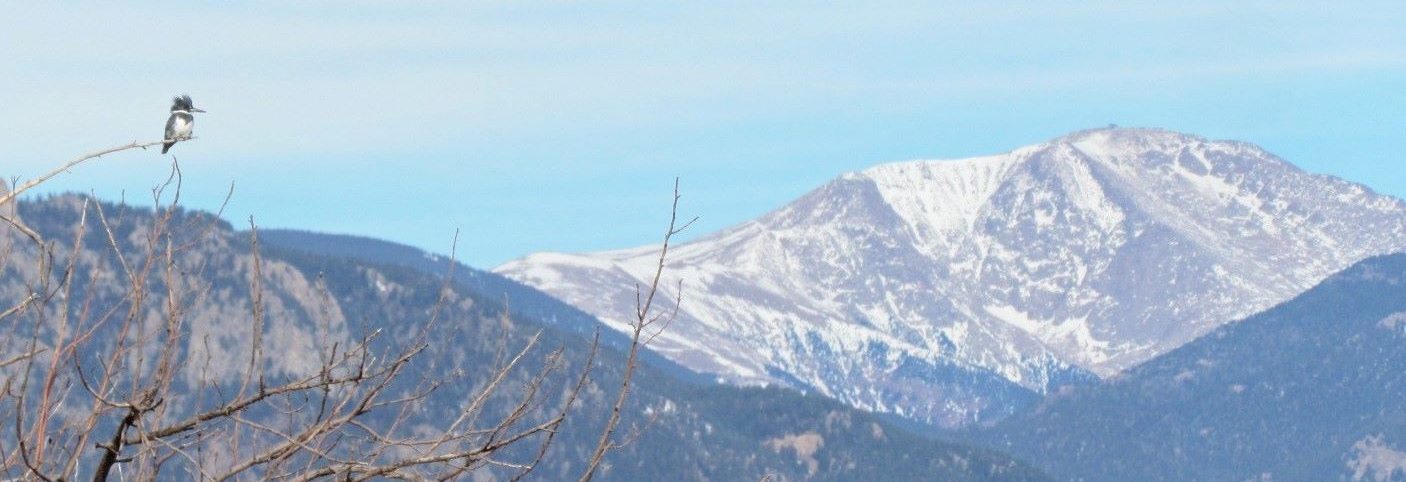
Wie zum Beispiel dir mir unbekannte kleine Drossel.
Liebe Grüße Brigitte
LikeLiked by 1 person
Danke für den Kommentar, liebe Brigitte. Ich stimme Dir zu, was die Natur angeht, und was die Menschen betrifft, kapiere ich auch nicht, was in unseren Köpfen vor sich geht. Dieser kleine Vogel heißt Blaukehl-Hüttensänger und ist ganz bezaubernd.
LikeLiked by 1 person
I visited this amazing place with my brother and wife six years ago. My brother and I climbed up those ladders to the cave/alcove. And, thankfully, we made it down the ladders safely too. The views from up there are very fine.
LikeLiked by 1 person
I’m glad you got to enjoy the trip up and down those ladders, Neil. We also enjoyed the experience and the views. It would have been quite the workout to do this trip several times a day for those who once lived there.
LikeLiked by 1 person
[…] here for part 2 (Chaco Canyon), here for part 3 (Mesa Verde), here for part 4 (Hovenweep), and here for part 5 […]
LikeLike
[…] here for part 1 (Overview), here for part 3 (Mesa Verde), here for part 4 (Hovenweep), and here for part 5 […]
LikeLike
[…] here for part 1 (Overview), here for part 2 (Chaco Canyon), here for part 4 (Hovenweep), and here for part 5 […]
LikeLike
[…] here for part 1 (Overview), here for part 2 (Chaco Canyon), here for part 3 (Mesa Verde), and here for part 5 […]
LikeLike
This was a fun reminiscence of my previous trip to Bandelier, coupled with some new pieces as well… Alcove House was closed on our visit so it was neat to see it here.
LikeLiked by 1 person
I remember you writing about your trip there. Too bad Alcove House was closed. You will have to go back!
LikeLiked by 1 person
It’s clear you had a great time at Bandelier. Any plans to return soon? I visited the site first in 1981 and again four months before your second visit in 2017. Do you get the impression that it’s not well known by people outside the region?
LikeLiked by 1 person
We loved our visits there, Steve, and we would like to return, but probably not any time soon. We were pleasantly surprised to not find the place overrun, it seems slightly off the beaten track, even though Los Alamos is nearby. I wonder if that has changed in the interim.
LikeLike
I do get the impression that Bandelier is less frequented than some other nature places in northern New Mexico.
LikeLiked by 1 person
Thank you also for visiting part 1 of the series!
LikeLike
Absolutely fascinating
LikeLiked by 1 person
Thank you, V.J., we thought so, too.
LikeLiked by 1 person
Welcome
LikeLiked by 1 person
I’ve been there! I think it was 2008, my first trip to NM. It is a fascinating place, and like you, I have great admiration for these people who lived and created it a beautiful, though challenging landscape. Very nice article, Tanja.
LikeLiked by 1 person
Thank you, Tina. It’s clear that New Mexico has enchanted both of us. The lives and accomplishments of the Ancestral Puebloans are intriguing to ponder and we never cease to be awestruck when we visit one of their homes.
LikeLike
Fascinating. Such a creative, determined culture to have built a life in this place without all the technologies and resources that we now take for granted.
LikeLiked by 1 person
Thank you, Mr. P. The buildings and societies were incredibly advanced. And all this was going on long before Columbus thought he had found India!
LikeLiked by 1 person
Fascinating 👍
LikeLiked by 1 person
Thank you, I’m glad you think so.
LikeLiked by 1 person
I love these New Mexico posts! My brother left Massachusetts as a senior in college to do a internship in landscaping in Colorado. When he finished he traveled on to New Mexico, where he settled and has lived for the last 50 years. He says Massachusetts is claustrophobic for him–too many trees! 😉
I never made it to Bandelier when I visited, but it was one of my dad’s most favorite places ever.
Thanks so much for sharing!
Julie
LikeLiked by 1 person
I’m so glad the New Mexico posts have appealed to you, Julie. I can relate to your brother’s decision to settle there, it’s a move we have also considered. We still love Colorado but it’s seeing too many people move here and change the character of the place–the old story repeated in so many places.
How nice that your dad loved Bandelier, something else we can relate to. I hope you will get an opportunity to see it with your own eyes one of these days. We would also like to revisit it at some point.
Best,
Tanja
LikeLiked by 1 person
I enjoyed being able to ‘visit’ this site from the comfort of my own home, thank you! It’s fascinating to see a place where people lived so long ago and try to imagine what their lives were like.
LikeLiked by 1 person
Thank you for visiting, Ann. Learning about the various Ancestral Puebloan groups and their dwellings has been fascinating and intriguing for us as well.
LikeLike
Thank you also for taking the time to look at several older posts! 🙏
LikeLiked by 1 person
What an interesting place. I will definitely put that on places to consider when we are out and about in that area – we need to explore more out west for sure. On a side note, just to let you know I am having massive issues with WP at the moment which is absolutely frustrating me to no end – mostly this manifests whenever I try to comment on WP blogs – keeps saying I am not authenticated, requires me to authenticate, completely ignores it, asks to reauthenticate, then eventually takes it only to not know who I am when I submit the comment and starts the process over again – every one in a while it sticks and then shows up, or take it but must move it to your pending or spam folder because when I try to do it again it gives me the duplicate comment error. Just to let you know, I am enjoying your posts, just hit or miss whether it takes my comments.
LikeLiked by 1 person
Sorry to hear about your WP challenges, Brian, that sounds sooo frustrating. I hope WP can sort it out for you if it keeps happening.
And Bandelier is definitely worth a visit. And while you are there, you might want to explore Los Alamos, too.
LikeLike
The first thing that caught my attention was that I’ve been misspelling the name of Bandelier for decades. I thought it was Bandolier, and that it was named for a Spaniard, not a Swiss gentleman! Once I got that straight in my mind, I went on to enjoy all the details you offered, and be just as amazed as other readers by the creativity and tenacity of those early peoples. In a way, it’s almost a blessing that the place is less known and less often visited. So many places in this country (and others) have been so overrun, closure is a real possibility. It seems that Bandelier, and other spots that you’ve visited, will remain open to you for return visits in the future.
LikeLiked by 1 person
Since Bandelier and Bandolier are homophones, it’s understandable that the two spellings might be confused.
We always appreciate places that aren’t overrun and one’s experience is so different when one does not have to contend with throngs of people. I hope Bandelier is still among those and one of these days we might try to visit there again.
LikeLiked by 1 person