2026 invites us to brush up on our rudimentary Latin (my apologies if yours happen to be fluent). While we might need to remind ourselves of the meaning of the words sesqui-centennial (1 ½ times 100), e.g. 150 years of Colorado statehood, or semi-quin-centennial (1/2 of 5 x 100), e.g. 250 years since the Declaration of Independence, the commonly used word century typically helps us remember that a Centennial (or Centenary) commemorates 100 years of existence. (The former seems to be more commonplace in the US, the latter in the UK.)
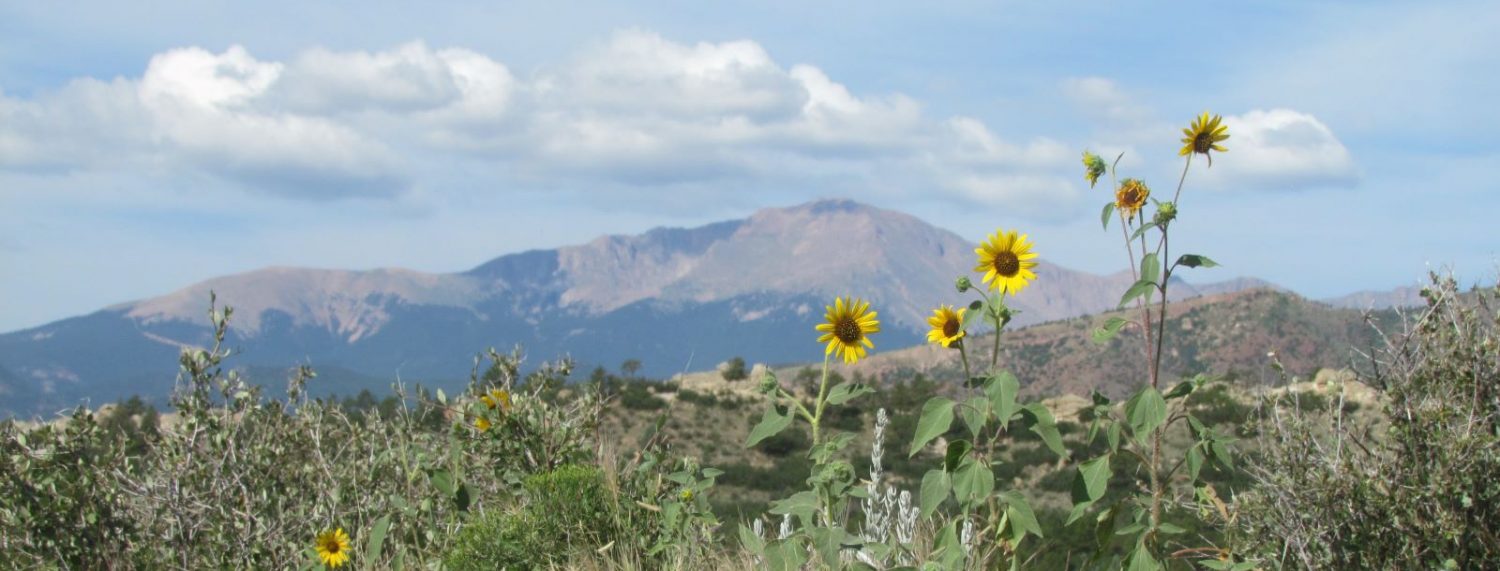
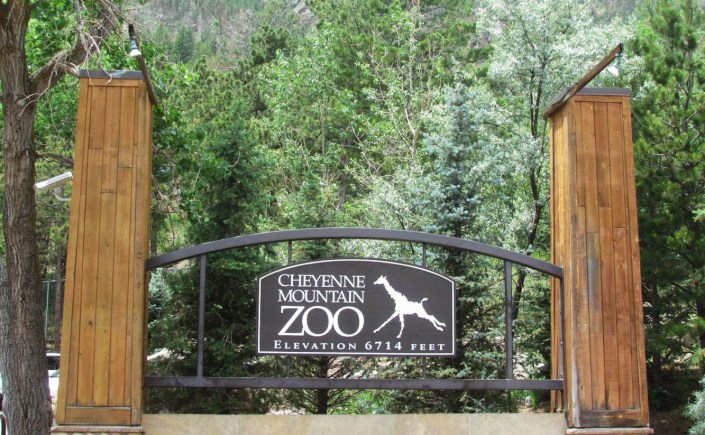
As it happens, 2026 is also the year when our local Cheyenne Mountain Zoo is commemorating its Centennial. Situated on the eastern flank of Cheyenne Mountain, one of the Front Range peaks that dominates the skyline just west of the city, its entrance is located at 6,714 feet above sea level. It comes as no surprise that the views afforded from such lofty heights are far-reaching. Apart from providing vistas of the mountains to the west and the Great Plains to the east, the zoo has also made it its mission to take a global view at wildlife. To that effect, 75 cents of every admission are donated toward conservation, and since the program’s inception in 2008, has raised more than $6 million for field conservation.
I have little doubt that many of us share ambivalent feelings with respect to zoos. Animals are confined to cages or enclosures and live in environments mildly to vastly different from their natural habitats. We likely have visited facilities where animals appear lethargic or even neglected, but this kind of cruelty should become more and more a thing of the past. One hopes.
Modern zoos attempt to approximate the animals’ habitats and care deeply for their charges with species-appropriate food, medical care, and regular activities intended to prevent boredom. Such is the case at the Cheyenne Mountain Zoo, which has been consistently ranked among the top-ten zoos in the United States in the last decades. Its 146 acres shelter more than 750 different animals representing 200 species (compared to the country’s best-known San Diego Zoo’s 12,000 animals across 650 species).
A selection of our zoo’s residents:


As we know, some species exist only in captivity because (wo)mankind and our destructive ways have usurped and destroyed their world. According to the International Union for the Conservation of Nature (IUCN), which is responsible for the publication of the Red List of Threatened Species, more than 48,600 species worldwide are threatened with extinction (in a 2021 post about the zoo, this number was 37,600!). This grievous figure represents 28% of all assessed species. Zoos and their breeding programs play an important role in the survival of at least some of these creatures.
Our local zoo has its origins in the exotic animal collection of Julie and Spencer Penrose, founders of world-famous hotel, The Broadmoor, located a short distance below the zoo. When their growing menagerie, some of which was kept on the hotel grounds, caused increasing consternation among the guests, the couple founded the precursor to the Cheyenne Mountain Zoo in 1926, before donating it to the city of Colorado Springs in 1938. As a non-profit organization that receives no tax support, most of its income is generated by revenues, membership dues, donations, corporate sponsors, and grants.
After allowing a previous membership to lapse, my husband and I renewed ours in 2020, and we have been members ever since. If you have visited my blog for a while, you might remember the series of posts I originally published about our zoo in 2021, and several follow-ups since then (see Cheyenne Mountain Zoo on the content bar above).
A selection of the zoo’s animal statuary:


I would be remiss not to provide an update on our local hippo “baby,” Omo. Born to mother Zambesi and father Biko on July 20, 2021, a few of you might remember seeing images of him in infancy, and in early childhood. As a five-year-old, Omo has nearly caught up in size with his mother (who weighs about 3,200 pounds), and to call him robust is an understatement. His estimated weight at birth was between 40 and 80 pounds (he was born underwater and was not weighed for several weeks). Adult male hippos can reach between 3,000 and 7,000 pounds, so stay tuned for future updates!


Did you happen to notice the date? Yes—today is a special day for him:
Happy 5th birthday, Omo!
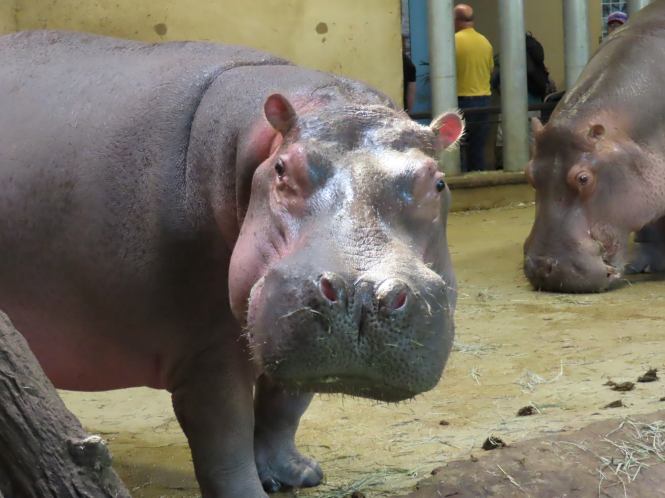
Birthday Boy Omo
July is full of anniversaries, and tomorrow, the zoo will host a special birthday party for Sully, a Western lowland gorilla. Born on July 21, 2025, to mother Asha and father Goma, Sully was the first gorilla born at the Cheyenne Mountain Zoo in 13 years and he has enchanted his parents, aunt, and countless zoo visitors ever since. He still spends most of his time riding piggyback (make that gorillaback) on Asha’s back, though he increasingly ventures short distances away from her, while she keeps a watchful eye. Talking about eyes—how about that gorilla gaze?!
Happy 1st birthday (tomorrow), Sully!


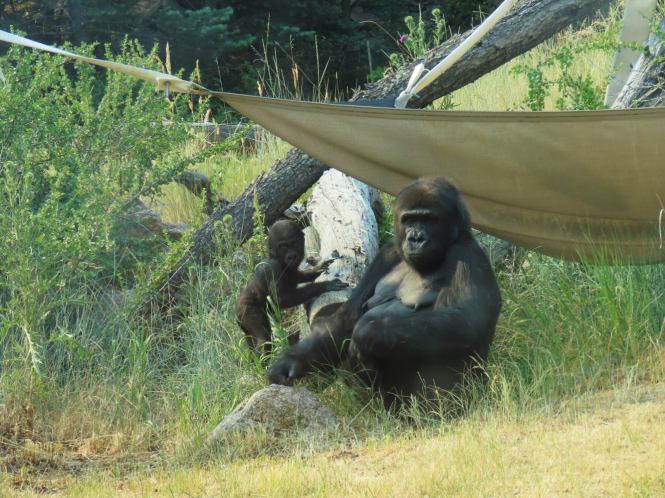
Sully, a few days shy of his first birthday, with his mother Asha
And Happy 100th Birthday, Cheyenne Mountain Zoo!
May you continue to provide a safe and caring home to many special creatures who are ambassadors for their kind and remind us how wonderful a world we have been born into, and how precarious a place it has become for all of us.


The ancient Greeks had a penchant for both logic (they developed mathematics) and the imagination (they developed an elaborate mythology). The fact that they called an animal like Omo a hippopotamus, literally ‘river horse,’ mixes fact and fantasy. The animal does spend much time in the water, but to describe it as any kind of horse strains credulity. A river cow would be more like it.
LikeLiked by 1 person
Unless their horses used to be MUCH bigger!
More likely, though, they didn’t share our understanding of what constitutes a species. We can probably come up with a long list of other animals with “wrong” names. Prairie dogs aren’t dogs. Meerkats aren’t cats. And so on.
LikeLike
I think you’ve implicitly invited yourself to put together a post about misnamed animals. You can include the ladybug, which is properly a lady beetle, and the koala, which is often mistakenly called a koala bear.
LikeLiked by 2 people
It’s funny you should mention this. The thought had crossed my mind . . .
LikeLike
Here’s a good source to get you started on your article. [I posted this comment a few minutes ago but it vanished, so I’m trying again.]
LikeLiked by 1 person
Thank you.
Your previous comment arrived as well but I deleted it. WP gremlins!
LikeLike
Our Houston zoo has done a good bit in past years to accomodate the animals in the most appropriate settings possible, and to engage the public in the activities there in a way that’s both entertaining and educational. The babies always are a treat, of course. Like your hippo and gorilla babies, our giraffe and other babies are well publicized and named with input from the public.
I grinned at Sully’s name. My first thought was of the pilot who safely landed the plane on the Hudson River. That event’s sometimes called the ‘miracle on the Hudson.’ Perhaps your Sully’s birth was considered something of a miracle. Do you know the source of the name?
LikeLiked by 1 person
It should really be the norm for zoos to do what’s best for the animals, and one hopes that it’s true for many, if not most, of them.
The local zoo here also let’s the public vote on names–with a donation.
Based on the article about Sully’s name (https://www.cmzoo.org/news/archive/big-news-for-ashas-baby-say-hello-to-sully/), he was named for Sully in Monster Inc., based on the description of the zoo keeper, and not for the pilot.
LikeLiked by 1 person
Happy Birthday allen Jubilaren und dir, liebe Tanja, ein Dankeschön für den interessanten Bericht und die schönen Bilder.
Liebe Grüße Brigitte
LikeLiked by 1 person
Vielen Dank, liebe Brigitte. Ich denke immer an Dich, wenn ich über unseren Zoo berichte. Auch wenn es keine Eisbären hier gibt. 🙂
LikeLiked by 1 person
It’s kind of weird that humans put other species on display. That said, I like zoos, though it has been many years since I’ve been to one.
LikeLiked by 1 person
I agree, Neil. But then again, it’s the only way the vast majority of us will ever see some of these animals.
Maybe you can make an excursion to your zoo, and tell us about it on your blog. 🙂
LikeLiked by 1 person
Such an amazing post and fantastic photos, Tanja!
I loved learning about your zoo’s history and conservation work.
Happy Birthday to Omo and Sully, and congratulations to the zoo on its Centennial
LikeLiked by 1 person
Thank you, Luisa.
I’m sure Omo and Sully appreciate the good wishes. 🙂
LikeLiked by 1 person
You are more than welcome!!!
LikeLiked by 1 person
Awww, happy birthday to Omo and Sully! I can’t believe I still haven’t visited this zoo. It’s clearly time to remedy that.
LikeLiked by 1 person
Thank you, Diana.
I think you will enjoy visiting, whenever it works out. FYI, entrance is timed, so you will have to make a reservation.
LikeLiked by 1 person
Good to know, thank you!
LikeLiked by 1 person
Great photos, Tanja. Always good tor read about a zoo that is caring for its animals in the best possible way.
LikeLiked by 1 person
Thank you, Pepper. One hopes that all zoos will eventually get there!
LikeLiked by 1 person
It sounds like a properly run zoo that is committed to the well-being of its animals. The photos of young Sully are enchanting; my father was a great fan of gorillas, and would have been thrilled to see him riding his mum’s back.
On an entirely different subject, I was amused by your reference to the “world-famous hotel, The Broadmoor”. I’ve never heard of it, nor I suspect have 99.9% of Brits. But just about every adult Brit has heard of “our” Broadmoor, which is a high-security psychiatric hospital that once housed some of the UK’s most notorious criminals! I wonder if the managers of “your” Broadmoor know about their famous namesake institution in the UK? 😊
LikeLiked by 1 person
Looking into a gorilla’s eyes is profoundly moving, I can relate to your father’s love for them. A friend of mine will visit Uganda this summer in hopes of seeing gorillas in the wild and I’m sure it will be an unforgettable experience.
Your juxtaposition between your Broadmoor and ours made me smile. I think the founders chose the name for its grandeur and European ring, as they were hoping to attract well-to-do travelers not only from the US but also from Europe. I don’t think they did a Google search before the hotel opening in 1918 to look for negative associations (even though your Broadmoor had already existed for more than half a century, as Wikipedia tells me).
LikeLiked by 1 person
This zoo reminds me of the one we have on the outskirts of our city. It too is moving more and more towards the wellbeing of animals and survival of endangered species. I’m so glad to see them focusing on these things. Let’s hope the older style zoos, mainly created for the prying eyes of humans get thrown into the dustbin of history.
LikeLiked by 1 person
Amen to that, Julie.
LikeLiked by 1 person
Ich zweifle immer noch gern an Zoos, mag mich ungern daran erinnern, wie die Zoos zu meiner Kindheit aussahen. Aber seither hat sich doch viel verändert zugunsten der Tiere in den Zoos. Heute wird dort ebenfalls viel zum ERhalt seltener Arten unternommen und überwiegend sind die Tiere gut untergebracht. Aber es gibt immer noch viel zu tun, um Tiere zu schützen, in der Natur und in manchen Zoos. Deine Bilder und Infos habe ich gern gesehen und gelesen. Wir haben mal in Denver den Zoo besucht. Kamen aus dem Yellowstone und haben in den Augen mancher Tiere im Zoo eine gewisse Traurigkeit oder Müdigkeit gesehen, die ihre Artgenossen im Yellowstone nicht zeigten. Das ist der kleine Unterschied.
Lieben Gruß
Maren
LikeLiked by 1 person
Auch ich kann mich an so manche Zoos aus meinen Kindertagen erinnern, die mich sogar damals traurig machten. Hoffentlich werden alle solche Zoos in nicht zu ferner Zukunft der Vergangenheit angehören.
Ich hoffe immer, daß die Kinder von heute, die die Wähler und Politiker von morgen sein werden, von ihren Begegnungen mit all diesen Kreaturen im Zoo dazu inspiriert werden, sich für ihr Überleben und ihren Erhalt einzusetzen, wie Du das ja auch formuliert hast.
Liebe Grüße zurück,
Tanja
LikeLiked by 1 person
Aww they are such precious animals. What a good photo of the hippo mother-son duo. I agree with you regarding zoos; they can be valuable in conservation and awareness of the animal species. As long as the animals are treated with respect and care and kept in good conditions, zoos can be a net positive for both wildlife and humankind. I have been fortunate enough to witness the hippos, African hippos and gorillas in their natural habitat. I noticed that the names of the gorilla parent Goma and the hippo parent Zambesi perhaps were after the countries they were adopted from? What a joy to have an amazing zoo in your backyard, Tanja.
LikeLiked by 1 person
Sorry about the typos, it’s quite late here. I meant the hippos, African penguins and gorillas in their natural habitat above *
LikeLiked by 1 person
No worries, I knew what you meant. 🙂
LikeLike
Thank you, Pooja.
I thought of you and your recent encounter with wild gorillas when I worked on this post; I’m glad you also were able to see hippos in the wild. I don’t think I ever will, so I will keep enjoying watching them at our zoo.
As far as I know, Zambesi and Omo were both named for African rivers. I’m not sure about Goma but assume he was so named for the wild gorillas in both Congos. I think all of them were born in captivity.
LikeLiked by 1 person
Hi, Mrs. Tanja-
I loved reading your anniversary post for your local zoo!! How awesome that this zoo is reaching the huge milestone of 100 years this month.
Despite feeling bad for the animals kept in cages, I have always loved the zoo! My family and I try to visit the Houston Zoo about 2 times a year, yet we have not been in over a year now! In Houston, the zoo is not even an option in the summer due to the extreme heat! Haha! Hopefully, we will be able to return in the late Fall months.
I especially enjoyed the animal spotlights that you gave! Happy Birthday to Omo and Sully! I am so glad to hear that they are healthy and doing well!
Also, I loved the photos that you included! They were absolutely beautiful!
Thank you for sharing this lovely post!
Blessings,
Gavin Broom
LikeLiked by 1 person
Thank you, Gavin, we also think it’s a remarkable zoo and we feel fortunate to be able to spend time there.
I hope you will make it back to your Houston Zoo once it cools off a little. I often wonder how really hot places keep their animals cool enough. It must take a lot of effort (and money) to do so.
Take care,
Tanja
LikeLiked by 1 person
I often wonder the same thing! I am glad I am not the one making those decisions! Haha!
I do hope to make it back soon! 🙂
Blessings,
Gavin Broom
LikeLiked by 1 person
This does look like a well-run zoo with healthy residents in suitable enclosures rather than in the barren cages of the old-time zoos. How wonderful that the gorillas have bred successfully and baby Sully is doing well in the company of his mother. Do they interact with Sully’s father?
LikeLiked by 1 person
Thank you, Carol.
Yes, all the gorillas spend time together, including Asha, Sully, Sully’s aunt, and Sully’s father. I observed an interaction that made me a little nervous. When the zookeepers threw lettuces into the enclosure, Asha wanted to grab one, but Goma took it first and swatted lightly at her while she was carrying Sully on her back. She retreated, was thrown more lettuce and everybody was eating. Based on all the reports I have been reading, Goma has been an attentive and curious father without showing any signs of aggression. One hopes that this won’t change but I’m sure the caretakers are watching closely.
LikeLiked by 1 person
Thanks Tanja –
That is lovely that they can interact as a family, as they would do in the wild, as far as I know.
Hoping that Sully continues to do well.
Btw what is the situation currently re the wildfires in Colarado?
LikeLike
Most of the wildfires in Colorado are partly contained, but they are still burning. We have had some rain, but still not enough, though some of the burn scars have experienced flash floods and mudslides.
There are multiple fires burning in Canada, as well as in France and Spain, and most of them are burning out of control.
It’s extremely unsettling to have so many trees burn. It will take forever to replace them, and what happens in the meantime?!
LikeLiked by 1 person
Although I hope you get more rain, the flip side of that is the flooding and the mudslides, also disastrous.
Scary times across the globe.
Here, we experienced months of widespread fires locally from October last year to early February this year. The native vegetation locally is fire adapted but much of that has been displaced by development and agriculture, or vegetation is altered by invasive alien plants resulting in hotter fires that are more devastating and harder to control.
LikeLiked by 1 person
All of us are learning about our environmental mistakes the hard way. We can only hope that there is time enough to make amends . . .
LikeLiked by 1 person
Thank you for asking!
LikeLiked by 1 person
I hope circumstances change to allow containment of the Colarado fires to improve still further, and that forests and infrastructure can be protected as much as possible.
Take care.
LikeLiked by 1 person
Thank you, Carol. I hope so too.
LikeLiked by 1 person
Thank you for sharing the Zoo’s birthday. What a wonderful opportunity to learn about life from parts of the world we would otherwise never know.
Enjoy your weekend.
LikeLiked by 1 person
Thank you, Wally. The zoo is very popular, and we hope that, if not all, most visitors will develop an appreciation for how tenuous life is on this planet and do their part to help protect it.
LikeLike
I haven’t been to a zoo in many years, but I do remember the occasional childhood visit and feeling sad at the confinement of bored-looking animals. Things have come a long way since then and I hope they will continue to improve.
LikeLiked by 1 person
Thank you, Ann. I wholeheartedly share your wish. These animals deserve only the best care.
LikeLiked by 1 person
Thanks for sharing this, Tanja. Your photos are super! The galleries work so well to show what a wide variety of animals you have there. I’m glad that the animals are well cared for with a lot of space. There are a couple of places around here that aren’t nearly as well done.
I , too have worried about whether it’s “right” to keep animals like that. I’ve wondered if visitors come away thinking about the lack of freedom for the animal as well as its beauty. However, we had rescued animals visit our first graders each year at school .(The animals would have been euthanized if not adopted by this refuge.) And I personally will never forget sitting in a circle with my students while Winnie the Wallaby hopped gently around. Or a most treasured memory: Aslan the Lynx, who although on a leash, came right up to me and looked me straight in the eyes. A peak experience! A zoo provides such great experiences to meet animals from all around the world!
LikeLiked by 1 person
Thank you, Julie. And I appreciate you sharing your own touching experiences with captive animals. One hopes that for many (most?) zoo visitors, looking into the eyes of other species will foster awe and the desire to protect them, both in captivity as well as in their native habitats.
LikeLiked by 1 person
Zoos have certainly come a long way from the stark concrete jail cells, er, enclosures, from when I was younger. Though I have to wonder what a tiger or giraffe things of snow? I’m glad zoos exist otherwise most of us would never get a chance to learn about one up close. Zoos do help with preservation of endangered species; a few species in the world only exist in captivity now as their native habitats are gone. Though I still think there can room for improvement, especially for the larger guests, they certainly have come a long way. Happy Birthday Cheyenne Mountain Zoo.
LikeLiked by 1 person
Thank you for sharing your thoughts, Brad. I agree with everything you have said. And I have the impression that the people responsible for running our local zoo take seriously the task to keep improving conditions for the animals in their care.
I also think it’s the responsibility of zoo visitors to criticize and make suggestions when it’s indicated. And, if possible, to help financially.
LikeLiked by 1 person
Liebe Tanja, deine tollen Fotos machen den Besuch im “Cheyenne Mountain Zoo” beinahe greifbar – besonders schön finde ich, wie aufmerksam du die Tiere und ihre Umgebung eingefangen hast.
Dein Beitrag hat mich auch über die schwierige Frage nach dem Sinn moderner Zoos nachdenken lassen. Wenn ein Zoo tatsächlich versucht, seinen Tieren nicht nur Platz, sondern auch möglichst viel von ihrer natürlichen Lebensweise zu bewahren, kann er mehr sein als ein Ort zum Anschauen: vielleicht auch ein Ort, an dem Menschen wieder einen Bezug zu Tieren entwickeln, die sie sonst nur aus Büchern oder Bildschirmen kennen.
Letztlich bleibt für mich die Frage, wie wir Menschen mit anderen Lebewesen umgehen, wenn wir die Kontrolle über ihre Lebensräume haben. Ein guter Zoo sollte uns deshalb vielleicht nicht nur Tiere zeigen, sondern uns daran erinnern, dass sie keine Ausstellungsstücke sind.
Herzliche Grüße aus Good Old Germany…..von Rosie
LikeLiked by 1 person
Vielen Dank für den Kommentar, liebe Rosie.
Ich stimme Dir völlig zu, was Deine Überlegungen über Zoos angeht. Ich bezweifle, daß es perfekte Zoos gibt, es sei denn, wir Menschen besuchen die Tiere in ihrem natürlichen Lebensraum, ohne sie irgendwie einzuschränken, doch das wäre dann eher eine Safari. Selbst bei Safaris frage ich mich manchmal, ob der Lebensraum noch völlig natürlich ist. Wir Menschen haben inzwischen überall so eingegriffen, daß es nur noch ganz wenige Orte gibt, wo Tiere völlig ungestört leben können, besonders wenn man Flugzeuge und Satelliten in Betracht zieht.
Aber ich denke, ein guter Zoo versucht sowohl, den Tieren die bestmöglichsten Lebensräume zu erschaffen, als auch das Publikum über Umweltschutz und Artenschutz zu informieren und hoffentlich sogar zum Umdenken und Neuhandeln anzuregen. In unserem Zoo gibt es z.B. eine Ausstellung über die Probleme mit Palmöl, und wie man als Konsumer Entscheidungen treffen kann, die der Umwelt hilft.
Im Endeffekt müssen wir Menschen aber auf jedem Niveau umdenken und anders handeln, sonst gibt es nur noch Tiere im Zoo und nicht in freier Natur.
Ganz liebe Grüße zurück,
Tanja
LikeLike
Liebe Tanja, genau diesen letzten Gedanken finde ich entscheidend. Vielleicht ist die eigentliche Frage bei Zoos gar nicht, ob sie „gut“ oder „schlecht“ sind, sondern wie und ob es jemals wieder möglich wäre, Lebensräume so zu bewahren, dass Tiere keinen Schutz hinter Zäunen brauchen.
Dein Beispiel mit der Palmöl-Ausstellung gefällt mir deshalb besonders. Ja, ein Zoo kann ein Ort des Betrachtens sein, aber im besten Fall wird er zu einem Ort des Nachdenkens: Der Besucher sieht nicht nur einen Orang-Utan, sondern beginnt vielleicht auch darüber nachzudenken, was sein eigener Einkauf mit dessen Lebensraum zu tun hat.
Und dein Gedanke über die scheinbar unberührte Natur ist ebenfalls wichtig. Selbst dort, wo kein Mensch auf dem Boden steht, fliegen vielleicht Flugzeuge darüber, Satelliten beobachten von oben – die Vorstellung einer wirklich unberührten Welt ist inzwischen fast schon ein romantisches Relikt.
Vielleicht liegt darin die paradoxe Aufgabe moderner Zoos: Sie sollten uns Tiere möglichst nahebringen und uns gleichzeitig daran erinnern, dass ihre eigentliche Freiheit dort beginnt, wo wir Menschen ihnen wieder genügend Raum lassen.
LikeLiked by 1 person
Das hast Du alles wunderbar zusammengefaßt, liebe Rosie!
LikeLiked by 1 person
❣️
LikeLike
I love zoos. I always feel like I have such an intimate relationship with the animals. The animals in this post are so content and well kept, and that is so important
LikeLiked by 1 person
If a zoo is well run and the animals are well taken care of, I also love zoos. I keep hoping that the other kinds of zoos will die out.
LikeLiked by 1 person
So do I!
LikeLiked by 1 person